

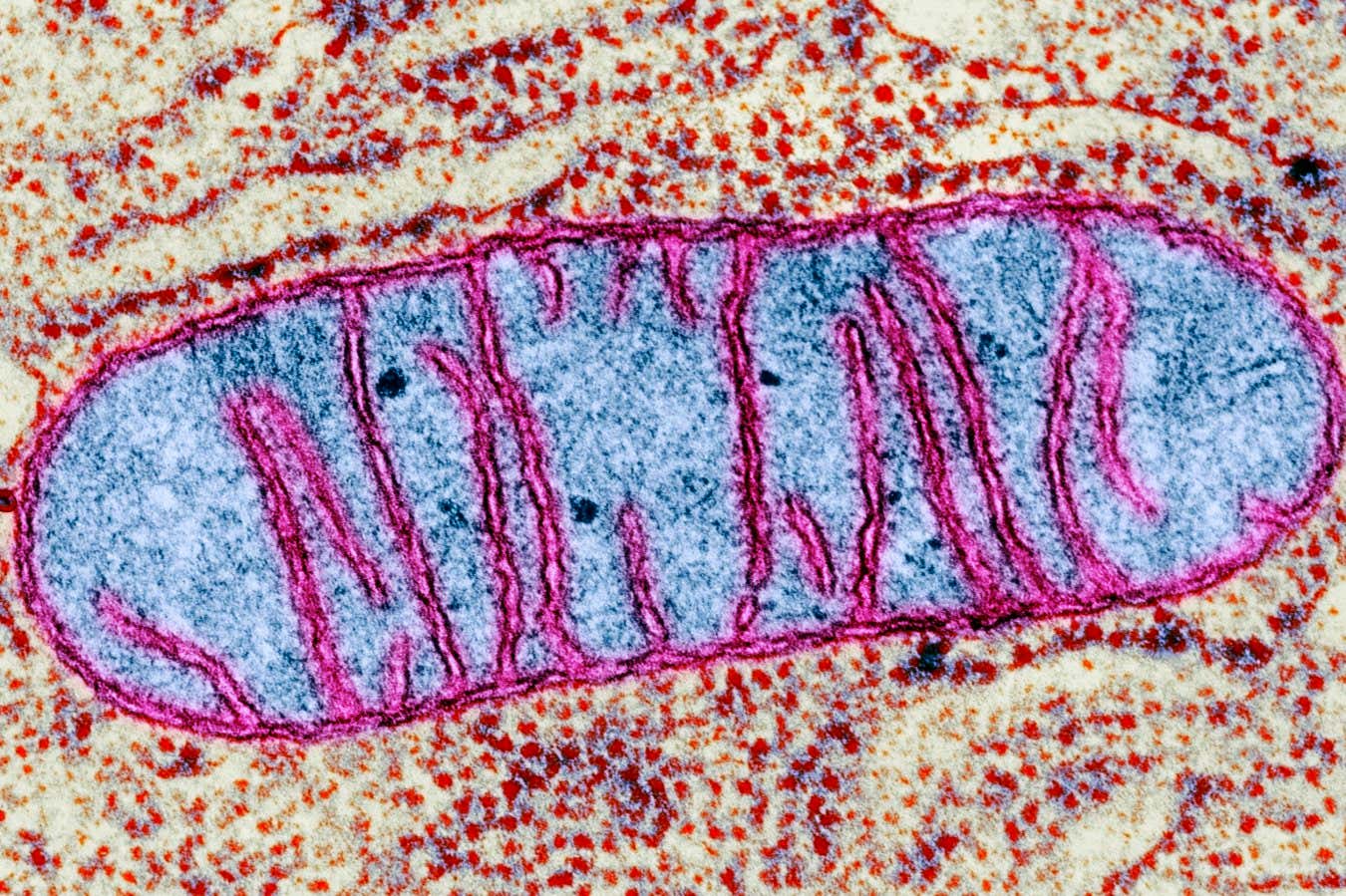
Mitochondria may have a function beyond providing energy
CNRI/SCIENCE PHOTO LIBRARY
The components of cells that provide them with energy may play an unexpected role in sleep. A study in fruit flies suggests that mitochondria in the brain help trigger sleep when they sense that the insects have been awake for too long – and the same mechanism may exist in people.
Researchers already have some understanding of how the brain reacts to sleep deprivation. These include changes to neuronal firing, the structural shapes inside cells and how genes are expressed. They have also identified specific neurons in the brain that switch on when sleep begins, but are less sure what tells those neurons to fire.
“Sleep is one of the really big biological enigmas,” says Gero Miesenböck at the University of Oxford. To better understand it, he and his colleagues used sequencing and fluorescent markers to study the genes expressed by sleep-centre neurons in about 1000 female fruit flies (Drosophila melanogaster), which sleep for 13 to 16 hours over the course of a day, usually at night.
The team let roughly half the flies get a full night’s sleep, while others were kept awake, either by gently shaking the tubes they were in or by genetically engineering them so that their wake-promoting neurons were switched on by a rise in temperature.
Among the sleep-deprived flies, the researchers found that sleep-inducing neurons ramped up the activity of genes involved in running and maintaining their mitochondria. These mitochondria also showed signs of being under stress, such as breaking into smaller pieces, clearing out damaged parts and forming contact points with nearby structures that help with repairs.
This stress may stem from the fact that the mitochondria keep producing energy even when the neurons are inactive. The researchers observed that this led to a build-up of electrons that leak out, generate free radicals – unstable molecules that can damage DNA – and ultimately trigger pressure to sleep, says Miesenböck. When these flies were finally allowed to sleep, the mitochondrial damage was repaired.
The researchers also found that flies with fragmented mitochondria in their sleep neurons slept less than normal and didn’t catch up on it after being kept awake. By contrast, flies whose mitochondria were engineered to fuse more readily, suggesting better repair mechanisms, slept more than usual and showed a stronger rebound after sleep deprivation. This supports the idea that mitochondria are involved in sleep pressure.
In another part of the experiment, flies were engineered to have raised mitochondrial activity in response to light. The team found that 1 hour of artificial lighting caused sleep duration to rise by as much as 20 to 25 per cent, compared with control flies.
While the study investigated the brains of flies, not people, mitochondria are relatively similar across animals. It supports the idea that aerobic metabolism – the production of energy from nutrients and oxygen, which takes place within the mitochondria of most animals – can drive sleep pressure in humans, says Ryan Mailloux at McGill University in Quebec, Canada.
This new understanding could eventually guide sleep treatments. “This provides us with novel opportunities to target these pathways [and] come up with new, efficacious ways to treat people who have sleep problems,” says Mailloux.
Michele Bellesi at the University of Camerino in Italy says “this is definitely a strong and thought-provoking paper”, but he questions its design. “Sleep deprivation is not simply extended wakefulness,” he says. “It may introduce additional stressors that may trigger cellular responses beyond those directly related to sleep-pressure build-up.”
In response, Miesenböck says his team used various ways to keep flies awake, including gene editing via temperature changes that are normal and non-stressful for the insects, and they all had the same effects on mitochondria. “What this study has revealed is that the sleep homeostat is actually looking at its own mitochondria to estimate the need for sleep,” he says.
Topics:
