
Close Menu
    National News Brief
    Tuesday, August 4
    • Home
    • Business
    • Lifestyle
    • Science
    • Technology
    • International
    • Arts & Entertainment
    • Sports
    National News Brief
    Home » Our wounds heal slower than the cuts and scrapes of other primates

    Our wounds heal slower than the cuts and scrapes of other primates

    Team_NationalNewsBriefBy Team_NationalNewsBriefApril 30, 2025 Science No Comments2 Mins Read
    Share
    Facebook Twitter LinkedIn Pinterest Email


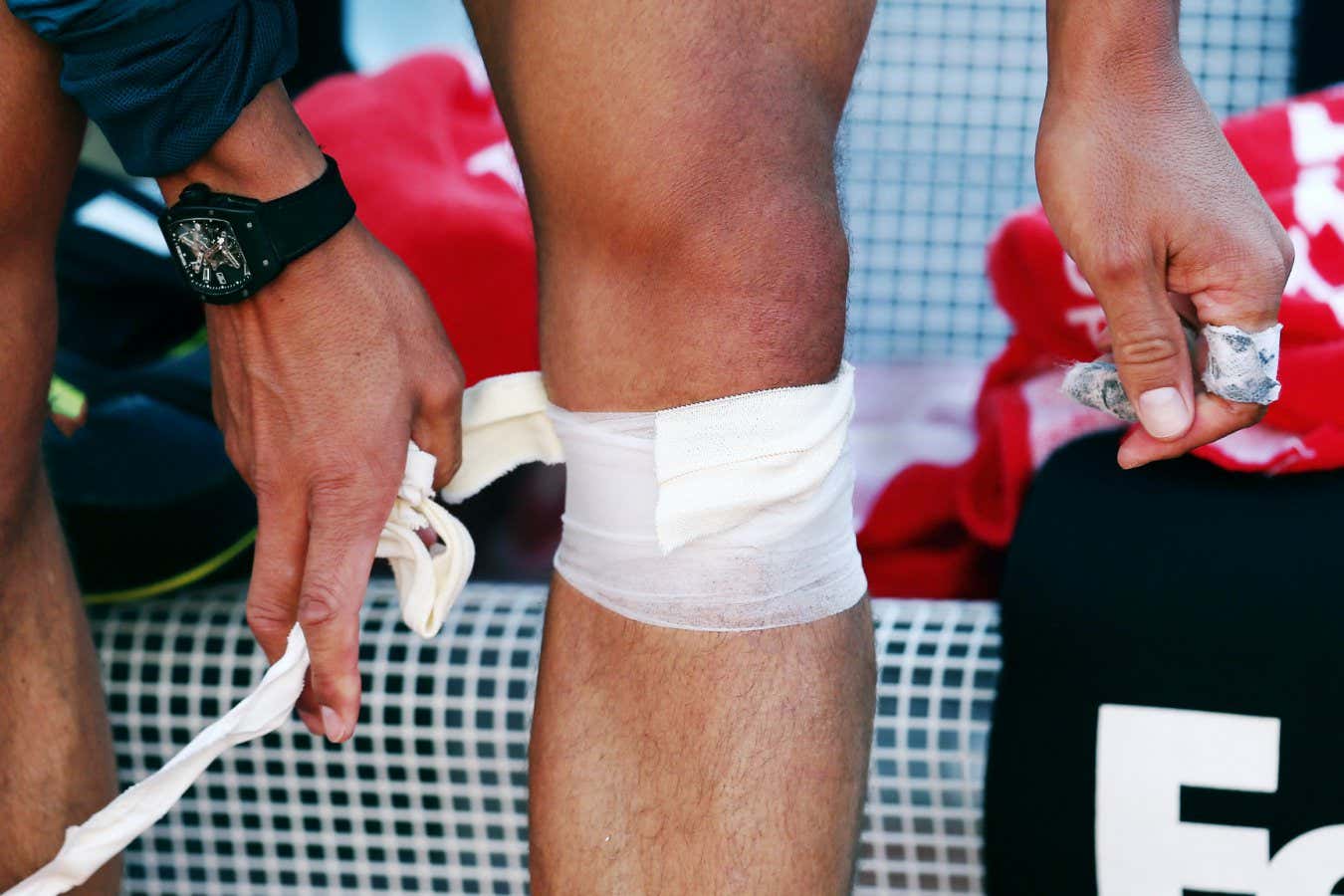
    Lesions close up quicker if you’re a chimpanzee than a person

    Clive Brunskill/Getty Images

    Human wounds take almost three times as long to heal as the injuries of other mammals, including chimpanzees, which are among our closest living relatives. It isn’t clear why, but it may be an evolutionary adaptation connected to the loss of most of our body hair.

    People have sluggish healing compared with other animals. To see just how slow this is, Akiko Matsumoto-Oda at the University of the Ryukyus in Japan and her colleagues turned to four other primate species: velvet monkeys (Chlorocebus pygerythrus), Sykes’ monkeys (Cercopithecus albogularis), olive baboons (Papio anubis) and chimpanzees (Pan troglodytes).

    The researchers anaesthetised at least five of each kind of primate, shaved off a small patch of their hair and created a circular wound 40 millimetres across, which they treated with an antibiotic ointment and covered with gauze for a day to protect against infection.

    Photographs and measurements of the wounds, taken every couple of days, revealed that they all the healed at about 0.61 millimetres per day.

    Next, Matsumoto-Oda and her colleagues looked at 24 patients at the University of the Ryukyus Hospital after they had skin tumours removed, finding that these wounds healed at a rate of just 0.25 millimetres per day.

    The researchers also conducted studies on mice and rats, and found pretty much the same healing rate as in the non-human primates. This suggests that there may be an evolutionarily optimal healing rate for most mammals, but not humans, says Matsumoto-Oda.

    “Most importantly, we found that chimpanzees exhibited the same wound-healing rate as other non-human primates, which implies that the slowed wound-healing seen in humans likely evolved after the divergence from our common ancestor with chimpanzees,” says Matsumoto-Oda.

    Why this happened isn’t known, but she says it may be linked to how early humans adapted to hot environments. “The slower wound healing rate in humans may be linked to evolutionary changes, such as the reduction in body hair,” says Matsumoto-Oda. “A higher hair density leads to an increase in stem cell numbers, which results in faster healing.”

    Social support, in the form of food sharing, nursing and medicine, may have compensated for the disadvantages of slow healing, she says.

    Topics:


    Source link

    Team_NationalNewsBrief
    • Website

    Keep Reading

    The U.S. military needs tungsten, but pristine NASA site may stand in the way

    It’s 90 degrees in the Arctic right now

    Senate funding resolution seeks to put OMB rule changes to research grants on hold

    “Lightning never strikes the same place twice” is a comforting saying and a completely false one — tall structures get hit again and again, and the Empire State Building alone is struck around twenty-five times a year

    A single bout of moderate exercise can raise BDNF in older adults — a molecule so central to neuroplasticity that neuroscientist John Ratey called it ‘Miracle-Gro for the brain’

    The size of a person’s vocabulary is one of the best single predictors of their general intelligence, not because big words make anyone smarter, but because quietly acquiring and keeping thousands of them draws on the same ability an IQ test measures

    Add A Comment

    Comments are closed.

    Editors Picks

    Market Talk – April 24, 2025

    April 25, 2025

    Shedeur Sanders not selected in first round of NFL draft

    April 25, 2025

    AG Pam Bondi’s performance proves she’s unfit for the job

    February 19, 2026

    Could a huge lunar telescope be our best chance of spotting aliens?

    August 31, 2025

    How best to catch up on rest and pay off your sleep debt

    January 29, 2025
    Categories
    • Arts & Entertainment
    • Business
    • International
    • Latest News
    • Lifestyle
    • Opinions
    • Politics
    • Science
    • Sports
    • Technology
    • Top Stories
    • Trending News
    • World Economy
    About us

    Welcome to National News Brief, your one-stop destination for staying informed on the latest developments from around the globe. Our mission is to provide readers with up-to-the-minute coverage across a wide range of topics, ensuring you never miss out on the stories that matter most.

    At National News Brief, we cover World News, delivering accurate and insightful reports on global events and issues shaping the future. Our Tech News section keeps you informed about cutting-edge technologies, trends in AI, and innovations transforming industries. Stay ahead of the curve with updates on the World Economy, including financial markets, economic policies, and international trade.

    Editors Picks

    Artificial intelligence: Why firms are struggling to set prices

    August 4, 2026

    Market Talk – August 3, 2026

    August 4, 2026

    Watch Pete Buttigieg Fantasize About Finding Newer Ways to Tax People (VIDEO)

    August 4, 2026

    Kevin Costner Was Once Put In His Place By Hollywood Icon

    August 4, 2026
    Categories
    • Arts & Entertainment
    • Business
    • International
    • Latest News
    • Lifestyle
    • Opinions
    • Politics
    • Science
    • Sports
    • Technology
    • Top Stories
    • Trending News
    • World Economy
    • Privacy Policy
    • Disclaimer
    • Terms and Conditions
    • About us
    • Contact us
    Copyright © 2024 Nationalnewsbrief.com All Rights Reserved.

    Type above and press Enter to search. Press Esc to cancel.