
Close Menu
    National News Brief
    Wednesday, June 17
    • Home
    • Business
    • Lifestyle
    • Science
    • Technology
    • International
    • Arts & Entertainment
    • Sports
    National News Brief
    Home » Ranching and farming have eroded almost all the soil in the Alps

    Ranching and farming have eroded almost all the soil in the Alps

    Team_NationalNewsBriefBy Team_NationalNewsBriefJuly 18, 2025 Science No Comments3 Mins Read
    Share
    Facebook Twitter LinkedIn Pinterest Email


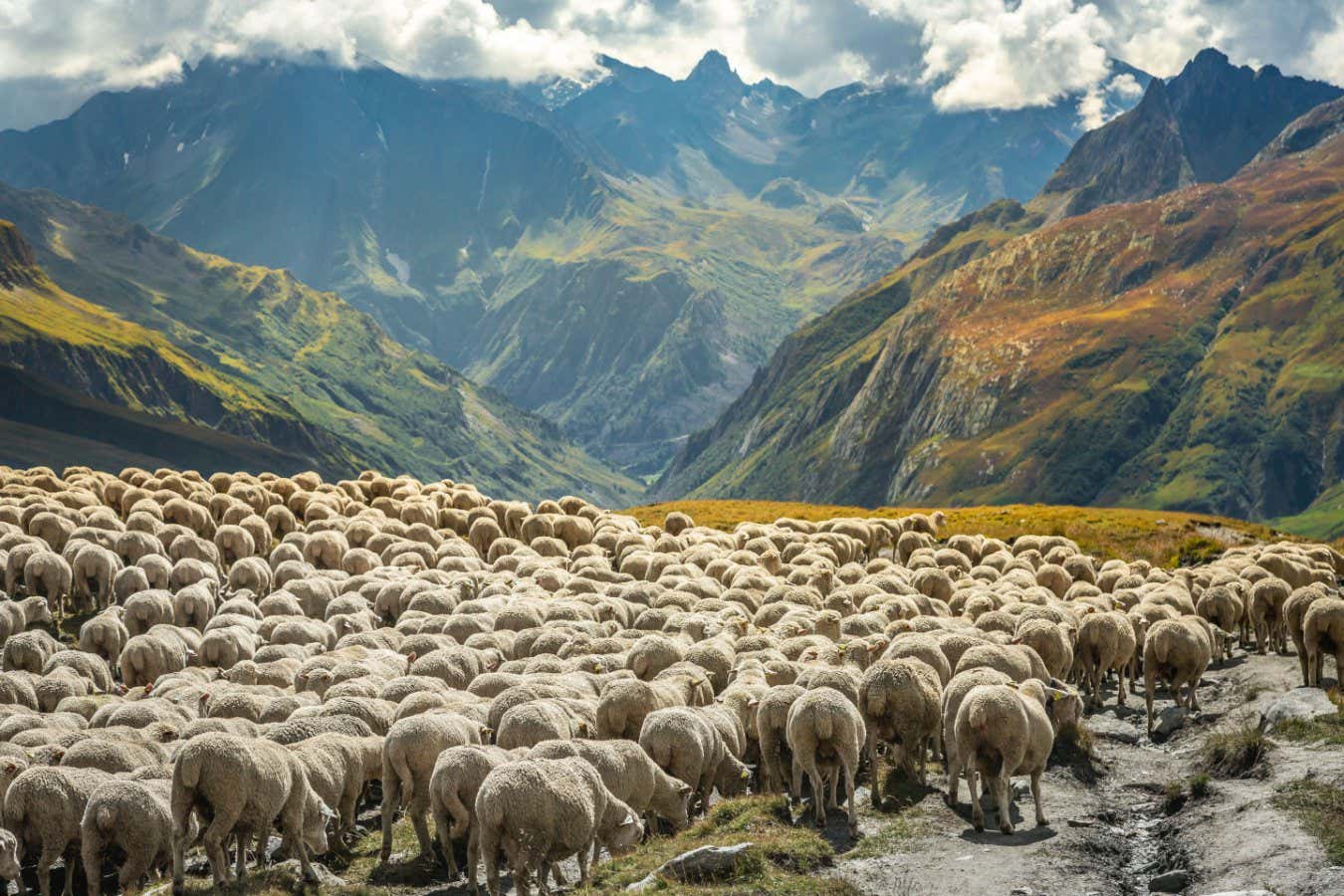
    A flock of sheep in a valley in the French Alps

    Travelart / Alamy

    Rapid erosion due to human activity, such as grazing livestock and farming, has stripped the Alps of almost all the soil formed since the retreat of the glaciers. This soil developed over millennia as plants, microbes and weather transformed hard rock into the carbon-rich foundation of this mountain ecosystem.

    “We destroyed the soils at a rate four to 10 times faster than they grew,” says William Rapuc at the French National Centre for Scientific Research.

    He and his colleagues studied lithium isotopes in sediments from Lake Bourget in the French Alps to reconstruct patterns of soil erosion from the surrounding region over the past 10,000 years. Because certain lithium isotopes are enriched as clay and other minerals form from the parent rock, they can tell you if the soils are developing or eroding, says Rapuc.

    They then compared these patterns of soil erosion from the lake sediment with other records of changing climate and human activity in the region. For the first several millennia after the glaciers receded, changes in climate could explain patterns of soil loss. Then, around 3800 years ago, something shifted. “What’s not explained by climate… has to be explained by the impact of humanity,” says Rapuc.

    The researchers identified three surges in soil loss, each of which they think corresponds with a different type of human activity in the area. Between 3800 to 3000 years ago, the surge came from grazing livestock at higher altitudes. Farming at lower altitudes drove the next surge, which happened between 2800 and 1600 years ago, and more intensive agriculture using ploughs and other tools drove the final surge from 1600 years ago until today. The loss of soil in the Alps accelerates erosion from wind and water, and means the region has less capacity to support vegetation and crops.

    The researchers say this shift 3800 years ago marks the beginning of a “soil Anthropocene” in the region, in which humans are the dominant influence on soil. But this past influence of soils “is nothing compared to what we can do now”, says Rapuc.

    For instance, in the US, where the soil Anthropocene started only a few centuries ago, soil loss is occurring at a rate as much as 1000 times faster than before the last glacial period, says Daniel Rath at the Natural Resources Defense Council, an environmental advocacy group. “We are fundamentally shifting how soils are actually formed and developed because of our agricultural activities.”

    Topics:


    Source link

    Team_NationalNewsBrief
    • Website

    Keep Reading

    What is a ‘normal’ memory slowdown, and when should I worry?

    Arctic Ocean reaches tipping point that could be dire for marine life

    A quantum state that lasts forever may finally be within our grasp

    The secrets to keeping your brain sharp in old age

    Sperm have been made magnetic to allow IVF inside the body

    Could the keto diet help treat anorexia, schizophrenia and depression?

    Add A Comment

    Comments are closed.

    Editors Picks

    Kylie Jenner And Timothée Chalamet Enjoy Dinner Date In Paris

    January 17, 2025

    After shocking Pelicot crimes, French surgeon to face trial in child sex abuse case

    February 17, 2025

    US stocks rise ahead of key speech by Fed chair

    August 22, 2025

    Nvidia Reports Earnings: Did the AI Giant Meet Its Targets?

    November 21, 2024

    US Justice Department official meets with Epstein associate Maxwell

    July 25, 2025
    Categories
    • Arts & Entertainment
    • Business
    • International
    • Latest News
    • Lifestyle
    • Opinions
    • Politics
    • Science
    • Sports
    • Technology
    • Top Stories
    • Trending News
    • World Economy
    About us

    Welcome to National News Brief, your one-stop destination for staying informed on the latest developments from around the globe. Our mission is to provide readers with up-to-the-minute coverage across a wide range of topics, ensuring you never miss out on the stories that matter most.

    At National News Brief, we cover World News, delivering accurate and insightful reports on global events and issues shaping the future. Our Tech News section keeps you informed about cutting-edge technologies, trends in AI, and innovations transforming industries. Stay ahead of the curve with updates on the World Economy, including financial markets, economic policies, and international trade.

    Editors Picks

    Oklahoma pastor drops out of House race after Trump unendorsed his campaign

    June 17, 2026

    IEEE’s 2026 Education Week Emphasized Lifelong Learning

    June 17, 2026

    Nationalism Forbidden By EU | Armstrong Economics

    June 17, 2026

    Jelly Roll Gets To Scrubbing As Divorce News Goes Viral

    June 17, 2026
    Categories
    • Arts & Entertainment
    • Business
    • International
    • Latest News
    • Lifestyle
    • Opinions
    • Politics
    • Science
    • Sports
    • Technology
    • Top Stories
    • Trending News
    • World Economy
    • Privacy Policy
    • Disclaimer
    • Terms and Conditions
    • About us
    • Contact us
    Copyright © 2024 Nationalnewsbrief.com All Rights Reserved.

    Type above and press Enter to search. Press Esc to cancel.