

It has been two weeks since world leaders gathered in Sharm el-Sheikh and declared, once again, that the path to peace in the Middle East had been found. As with previous such declarations, the Palestinians, the people who must live that peace, were left out.
Today, Israel holds the fragile ceasefire hostage while the world is fixated on the search for the remaining bodies of its dead captives. There is no talk of the Palestinian right to search for and honour their own dead, to mourn publicly the loss.
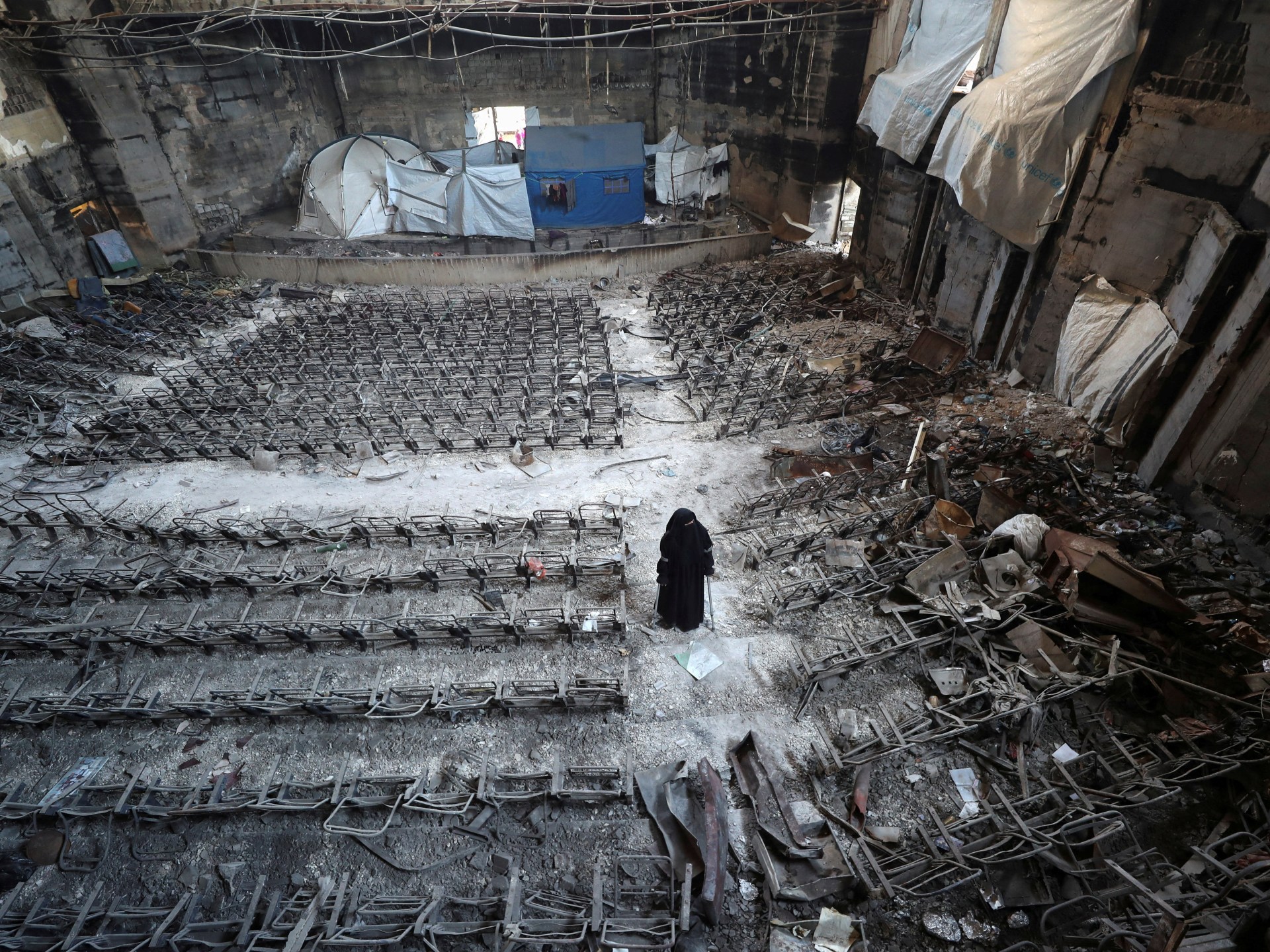
The idea of reconstruction is dangled before the residents of Gaza. Those who call for it from abroad seem to envision just clearing rubble, pouring concrete, and rehabilitating infrastructure. There is no talk of rebuilding people – restoring their institutions, dignity, and sense of belonging.
But this is what Palestinians need. True reconstruction must focus on the people of Gaza and it must begin not with cement but with the restoration of classrooms and learning. It must begin with young people who have survived the unthinkable and still dare to dream. Without them – without Palestinian educators and students at the centre – no rebuilding effort can endure.
Reconstruction without exclusion
The plans for governance and reconstruction of Gaza currently circulating are excluding those Palestinians most affected by the genocide. Many aspects of these plans are designed to control rather than empower – to install new overseers instead of nurturing local leadership. They prioritise Israel’s security over Palestinian wellbeing and self-determination.
We have seen what such exclusion leads to in the Palestinian context: dependency, frustration and despair. As scholars who have worked for years alongside Palestinian academics and students, we have also seen the central role education plays in Palestinian society.
That is why we believe that reconstruction has to start with education, including higher education. And that process has to include and be led by the Palestinians themselves. Palestinian educators, academics and students have already demonstrated they have the strength to persevere and rebuild.
Gaza’s universities, for example, have been models of resilience. Even as their campuses were razed to the ground, professors and scholars continued to teach and research in makeshift shelters, tents, and public squares – sustaining international partnerships and giving purpose to the most vital part of society: young people.
In Gaza, universities are not only places of study; they are sanctuaries of thought, compassion, solidarity and continuity – the fragile infrastructure of imagination.
Without them, who will train the doctors, nurses, teachers, architects, lawyers, and engineers that Gaza needs? Who will provide safe spaces for dialogue, reflection, and decision-making – the foundations of any functioning society?
We know that there can be no viable future for Palestinians without strong educational and cultural institutions that rebuild confidence, restore dignity and sustain hope.
Solidarity, not paternalism
Over the past two years, something remarkable has happened. University campuses across the world – from the United States to South Africa, from Europe to Latin America – have become sites of moral awakening. Students and professors have stood together against the genocide in Gaza, demanding an end to the war and calling for justice and accountability. Their sit-ins, vigils and encampments have reminded us that universities are not only places of learning but crucibles of conscience.
This global uprising within education was not merely symbolic; it was a reassertion of what scholarship is about. When students risk disciplinary action to defend life and dignity, they remind us that knowledge divorced from humanity is meaningless.
The solidarity they have demonstrated must set the tone for how institutions of higher education approach engagement with and the rebuilding of Gaza’s universities.
The world’s universities must listen, collaborate and commit for the long term. They can build partnerships with Gaza’s institutions, share expertise, support research and help reconstruct the intellectual infrastructure of a society. Fellowships, joint projects, remote teaching and open digital resources are small steps that can make a vast difference.
Initiatives like those of Friends of Palestinian Universities (formally Fobzu), the University of Glasgow and HBKU’s summits, and the Qatar Foundation’s Education Above All already show what sustained cooperation can achieve. Now that spirit of solidarity must expand – grounded in respect and dignity and guided by Palestinian leaders.
The global academic community has a moral duty to stand with Gaza, but solidarity must not slide into paternalism. Reconstruction should not be a charitable gesture; it should be an act of justice.
The Palestinian higher education sector does not need a Western blueprint or a consultant’s template. It needs partnerships that listen and respond, that build capacity on Palestinian terms. It needs trusted relationships for the long term.
Research that saves lives
Reconstruction is never just technical; it is moral. A new political ecology must grow from within Gaza itself, shaped by experience rather than imported models. The slow, generational work of education is the only path that can lead out from the endless cycles of destruction.
The challenges ahead demand scientific, medical and legal ingenuity. For example, asbestos from destroyed buildings now contaminates Gaza’s air, threatening an epidemic of lung cancer. That danger alone requires urgent research collaboration and knowledge-sharing. It needs time to think and consider, conferences, meetings, exchanges of scholarships – the lifeblood of normal scholarly activity.
Then there is the chaos of property ownership and inheritance in a place that has been bulldozed by a genocidal army. Lawyers and social scientists will be needed to address this crisis and restore ownership, resolve disputes and document destruction for future justice.
There are also the myriad war crimes perpetrated against the Palestinian people. Forensic archaeologists, linguists, psychologists and journalists will help people process grief, preserve memory and articulate loss in their own words.
Every discipline has a role to play. Education ties them together, transforming knowledge into survival – and survival into hope.
Preserving memory
As Gaza tries to move on from the genocide, it must also have space to mourn and preserve memory, for peace without truth becomes amnesia. There can be no renewal without grief, no reconciliation without naming loss.
Every ruined home, every vanished family deserves to be documented, acknowledged and remembered as part of Gaza’s history, not erased in the name of expedience. Through this difficult process, new methodologies of care will inevitably come into being. The acts of remembering are a cornerstone of justice.
Education can help here, too – through literature, art, history, and faith – by giving form to sorrow and turning it into the soil from which resilience grows. Here, the fragile and devasted landscape of Gaza, the more-than-human-world can also be healed through education, and only then we will have on the land once again, “all that makes life worth living”, to use a verse from Palestinian poet Mahmoud Darwish.
Rebuilding Gaza will, of course, require cranes and engineers. But more than that, it will require teachers, students and scholars who know how to learn and how to practise skilfully. The work of peace begins not with cement mixers but with curiosity, compassion and courage.
Even amid the rubble, and the ashlaa’, the strewn body parts of the staff and students we have lost to the violence, Gaza’s universities remain alive. They are the keepers of its memory and the makers of its future – the proof that learning itself is an act of resistance, and that education is and must remain the first step towards sustainable peace.
The views expressed in this article are the authors’ own and do not necessarily reflect Al Jazeera’s editorial stance.
