

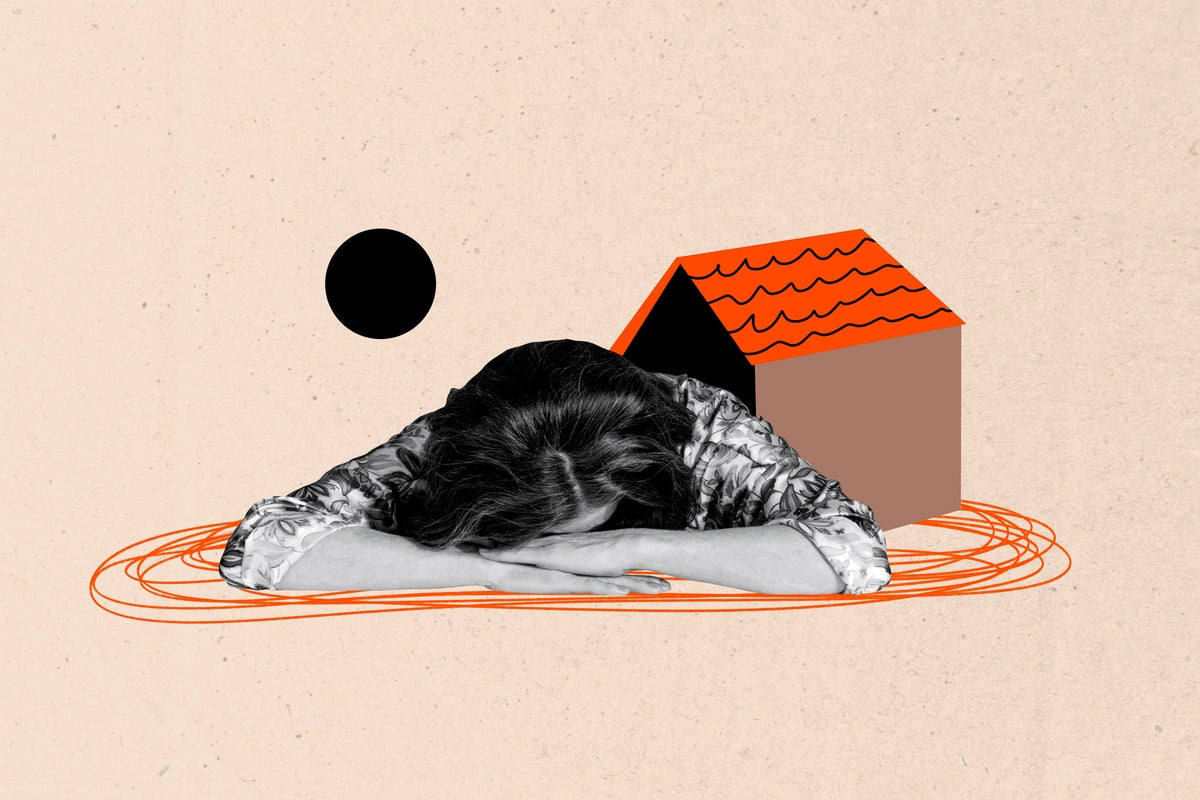
When the pandemic hit, just like so many Americans, researcher Emma Harrington started working remotely. What shocked her most in those early days of COVID was how productive she was. Then a Ph.D. student at Harvard University, she found that she could still focus on her work despite being at home. But it wasn’t all positive: the “social ramifications” took a toll, particularly during periods when she lived alone. “I struggled with having just whole days where I couldn’t be sure that I would see people, even in brief ways,” she recalls.
It turns out that Harrington isn’t alone—new research by her and her colleagues suggests that the long-term shift to remote or hybrid work after the pandemic may have had an adverse effect on workers’ mental health. The study was published today in Science.
Importantly, the research compared workers’ mental health and alone time before and after the peak years of the pandemic in a bid to capture the effect of remote work outside of 2020 and 2021, when COVID was most acute and people were forced to isolate. Certainly, many workplaces have remained entirely remote or have a hybrid in-office policy. For example, a 2023 poll from the U.S. Bureau of Labor Statistics found that as many as one in five people said they worked remotely.
On supporting science journalism
If you’re enjoying this article, consider supporting our award-winning journalism by subscribing. By purchasing a subscription you are helping to ensure the future of impactful stories about the discoveries and ideas shaping our world today.
Harrington, now an assistant professor at the University of Virginia, and her co-authors analyzed the results of five surveys that were completed between 2011 and 2024 and included a total of 588,322 Americans. The team sorted workers into “remotable” jobs, such as software engineering or law, versus “nonremotable” careers, such as nursing.
What they found was stark: after controlling for confounding factors such as age, parental status and education levels, workers in remote-friendly jobs, particularly those who lived alone, reported spending much more time by themselves and having greater indicators of mental distress than their nonremote peers.
One statistic particularly stood out to Harrington: in more recent years, around 25 percent of survey respondents who were both working in remotable jobs and living alone said they’d spent the entire day alone. “That amount of isolation could have pretty detrimental mental health impacts,” Harrington says.
The study doesn’t capture all the nuanced effects of remote work. The authors specifically didn’t focus on work productivity, for example, or individual benefits, such as skipping stressful commutes or spending extra time with family. “Our results are not saying that there are no benefits of remote work,” Harrington says. Instead the findings indicate “net effects” on mental well-being across the country, she explains.
After all, remote work is popular: research shows that about 80 percent of workers want to work from home at least one day per week. Data suggest that “the best way to improve mental health with WFH [work from home] is: let people choose,” says Nicholas Bloom, an economics professor at Stanford University, who studies remote work but was not involved in the new Science study. “People don’t want to be forced into the office five days a week but also don’t want to be forced to lock down WFH five days a week.”
“My big fear is: this study is misunderstood as showing the WFH is bad for mental health, and this leads a lot of CEOs to say, ‘WFH is bad for you, so get back to the office now; it’s for your own good,’” Bloom adds.
It’s unclear what may be driving the discrepancy between people’s preferences for remote work and potential negative effects on their mental well-being, Harrington says. “Our hypothesis about this is that it just takes a while for these negative impacts to materialize for people,” she says. That lag might make it difficult for people to link remote work to their negative mental health outcomes, she says. But more research is needed to know for sure.
It’s also unclear whether going into the office a few days per week might “mitigate” any negative mental health outcomes, the authors write. It’s also important to consider how much the work environment itself may affect employees.
At the very least, we ought to consider ways to make remote work better, the authors conclude. “Across a range of remote work arrangements, both individuals and organizations may want to prioritize making remote work less isolating by, for example, coordinating in-office days for hybrid workers or encouraging informal interaction, even online,” they write. Zoom party, anyone?
It’s Time to Stand Up for Science
If you enjoyed this article, I’d like to ask for your support. Scientific American has served as an advocate for science and industry for 180 years, and right now may be the most critical moment in that two-century history.
I’ve been a Scientific American subscriber since I was 12 years old, and it helped shape the way I look at the world. SciAm always educates and delights me, and inspires a sense of awe for our vast, beautiful universe. I hope it does that for you, too.
If you subscribe to Scientific American, you help ensure that our coverage is centered on meaningful research and discovery; that we have the resources to report on the decisions that threaten labs across the U.S.; and that we support both budding and working scientists at a time when the value of science itself too often goes unrecognized.
In return, you get essential news, captivating podcasts, brilliant infographics, can’t-miss newsletters, must-watch videos, challenging games, and the science world’s best writing and reporting. You can even gift someone a subscription.
There has never been a more important time for us to stand up and show why science matters. I hope you’ll support us in that mission.
