

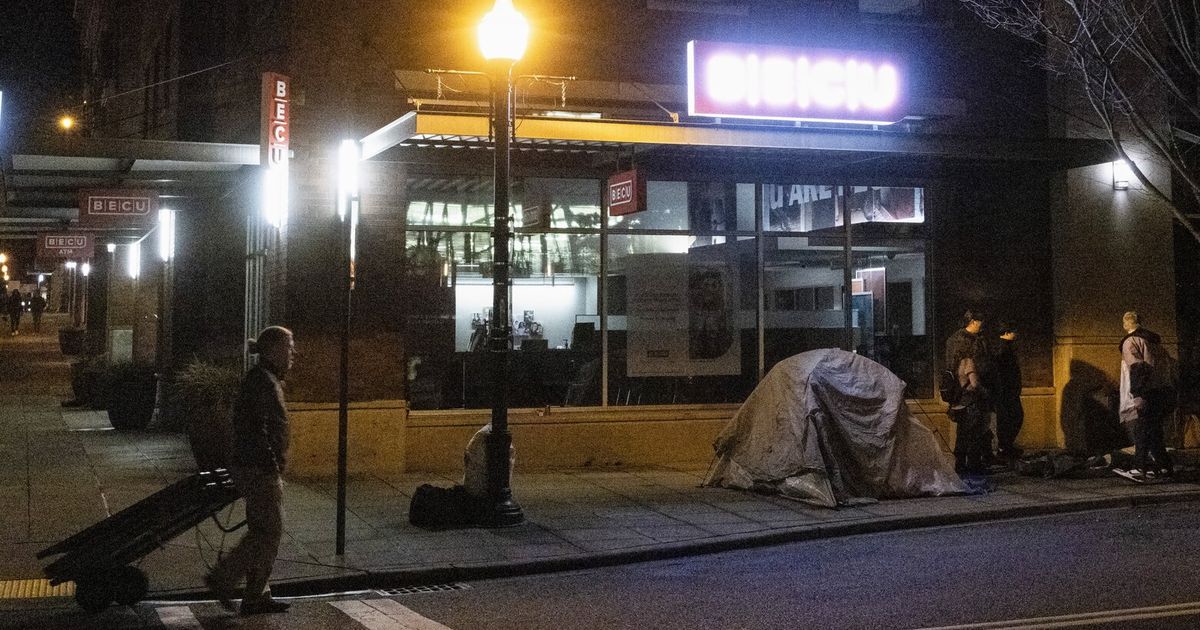
Last March, Burien’s City Council tightened its ban on sleeping outdoors and made it illegal for people to sleep within 500 feet of schools, day care centers, parks and libraries. That came after complaints by residents that homeless people were spending the night — and much of the day — in those areas.
And now the council has tightened the screws on the unhoused even more by completely banning overnight camping.
Burien is not alone in banning outdoor overnight living or tweaking ordinances that make it harder for unhoused people to survive. Other cities have done the same since the U.S. Supreme Court ruled in June in favor of Grants Pass, Ore., in its ban on sleeping in public parks. The court ruled that such bans are not cruel and unusual punishment, even if there are no shelters available for the people living outside.
Cities such as Auburn, Richland and Aberdeen have taken actions to move out people who have no place to sleep. Basically, “keep it moving, don’t stop here.”
If city officials think putting more restrictions on unhoused people will fix their homelessness problems, they likely will be disappointed.
The 2024 Point-in-Time count of homeless people revealed more than 16,000 unhoused people in King County, and the U.S. Department of Housing and Urban Development reported an 18% increase in homelessness nationally last year. Bans on camping overnight will, however, accomplish two things: increase the number of people cited or arrested for violating the ordinances, and push people further out of heavily trafficked areas and into places where they can hide from law enforcement.
City officials also can expect pushback from advocates for homeless people. On Feb. 3, a circuit court judge in Oregon ordered Grants Pass to temporarily pause enforcement of its new camping rules as part of a lawsuit by Disability Rights Oregon.
Hundreds of millions of dollars have been spent on addressing homelessness in the region. And municipalities and states should expect cuts to federal spending on social services under the Trump administration.
Penalizing poverty, mental illness, addiction, disabilities and job insecurity — all things that contribute to homelessness — won’t help solve the problem.
“The people who are coming in are worried and fearful what this will mean,” said the Rev. Jenny Partch, pastor of Highline United Methodist Church and director of the 50-bed Burien Severe Weather Shelter. “They are asking us where can they go when we’re not open. It would be difficult for them to get to Seattle.”
Coordinating with nonprofits, government agencies and churches is a better, more humane way to finding solutions to help improve lives than ordinances that restrict where people in need can sleep.
