

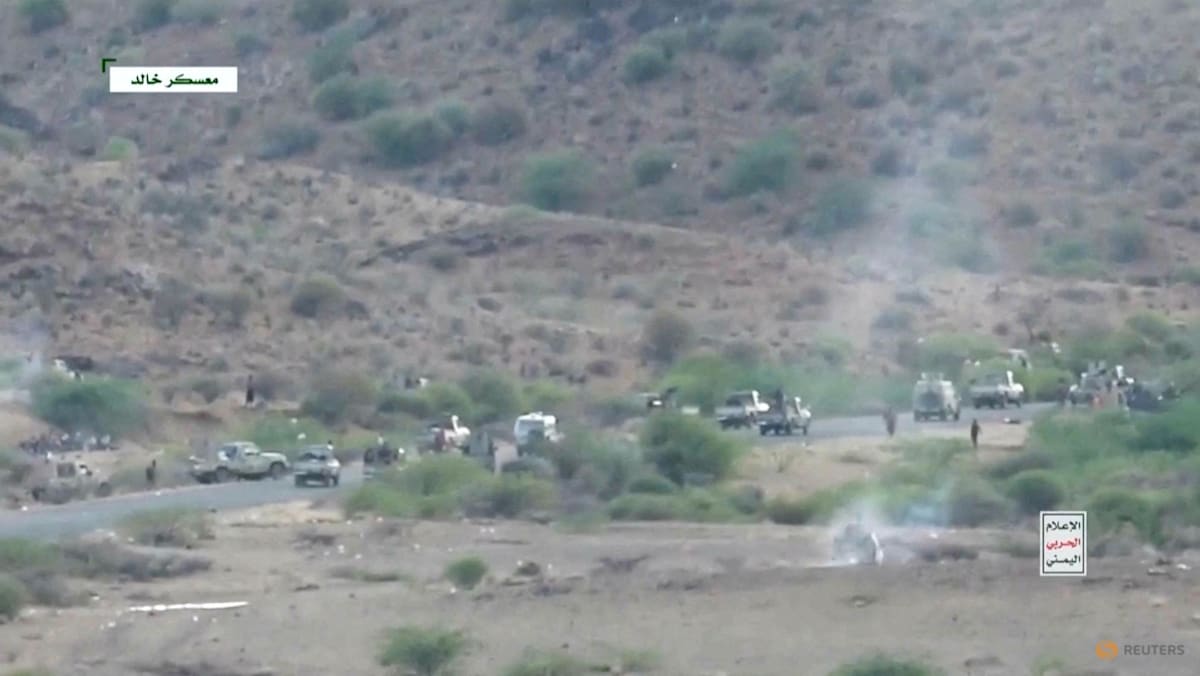
The Saudi-led coalition supporting Yemen’s government since 2015 against the Houthis said six ballistic missiles had been intercepted, thwarting attacks on Taif and Yanbu.
“Escalations and violations by the terrorist Houthi militia will be dealt with firmly,” said coalition spokesman Turki al-Maliki on X.
Earlier, the Saudi Civil Defence had issued a brief series of alerts including one for Mecca, home to Islam’s holiest sites, with separate warnings for the Red Sea governorate of Yanbu as well as the Taif, Jeddah and Tabuk regions.
The alerts were lifted a few minutes later. In recent weeks, alerts have often preceded attacks by the Houthis.
Iran’s President Masoud Pezeshkian denied on Thursday that Tehran was directing Houthi battle plans.
“The Houthis are responsible for their own actions. They don’t take directions from us as those who are resisting in the region, based on the situations that have been imposed on them,” Pezeshkian told Fox News, according to the broadcaster’s translation of his remarks.
With pressure mounting on Saudi Arabia, French President Emmanuel Macron said France planned to “send military assets, meaning soldiers, radars and defence systems to protect” Yanbu.
The infrastructure in and around Yanbu forms a key node in Saudi Arabia’s vast network of energy installations.
Yanbu serves as the kingdom’s primary crude export terminal on the Red Sea and is connected to its oil-producing regions near the Gulf coast by the East-West pipeline, also known as Petroline.
Yanbu is also home to major oil storage and refining facilities, while its location on the Red Sea provides Saudi Arabia with an alternative route for sending crude and petroleum products towards European markets.
