

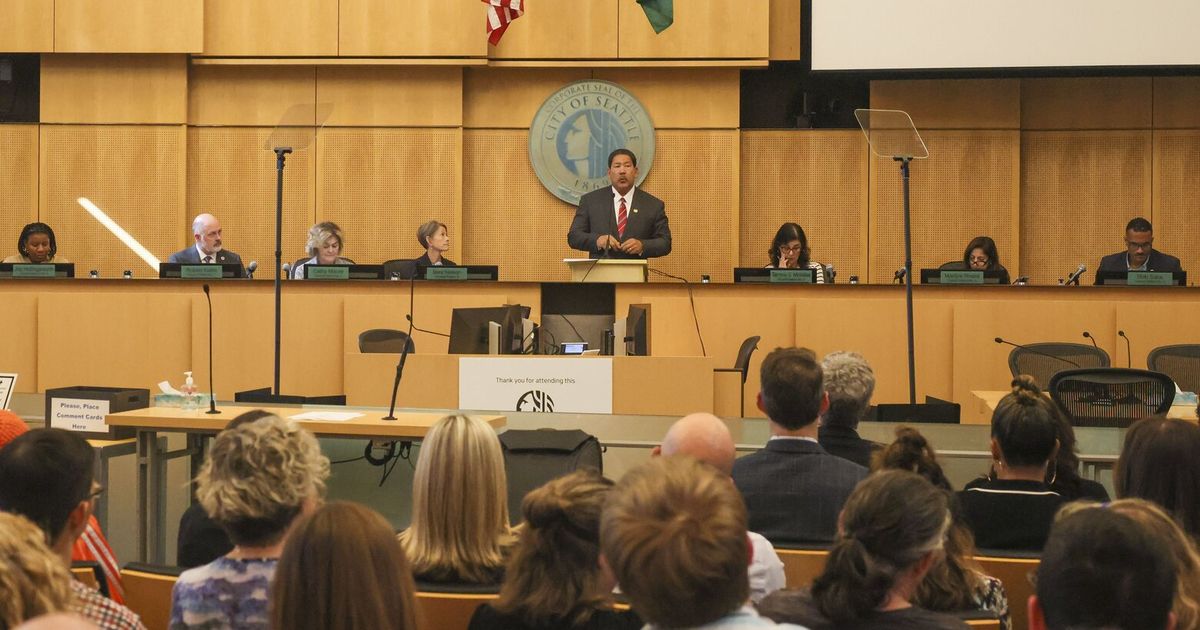
A proposed ordinance making its way through Seattle’s Governance, Accountability, and Economic Development Committee would amend the Code of Ethics to allow elected officials to vote on legislation even when they have a direct financial interest in the outcome. Supporters argue this change is necessary for “clarity” and “flexibility.” In reality, it would further erode public trust in local government and let council members profiteer through public office.
Seattle’s current code is clear: Public officials must remain independent, impartial and act in service of the public good — a precedent grounded in the very foundation of representative democracy.
This bill, sponsored by Councilmember Cathy Moore, would upend this standard of behavior by reducing a council member’s responsibility to public disclosure of financial interest before they vote on legislation. But disclosure is not accountability. Voters should (and do) expect more than a brief statement of a potential conflict of interest before a council member casts a consequential vote. They expect ethical safeguards strong enough to ensure public decisions are made for the common good — not a council member’s private gain.
Proponents argue the current code prevents council members from fully engaging on issues that matter to their constituents. There are two things worth bringing up: First, council members’ engagement would only be restricted when the financial interest is not shared by a substantial segment of the population, and, second, while the most decisive action a council member can take is to vote, their most powerful tool is their ability to build and leverage coalitions of support among their colleagues.
Some council members have complained that terms like “substantial segment” and even “financial interest” itself are not defined in the current code. Rather than arguing for ethical regression, the council and the Ethics and Elections Commission ought to define these terms to clarify when recusal should apply.
People find the proposed changes problematic because some council members’ financial interests are shared by too few in the city. Nobody expects council members who own homes to recuse themselves from land use, zoning and comprehensive planning. Nobody even expects council members who rent to recuse themselves from tenant rights decisions. Many Seattleites own homes. Most are renters. Very few are landlords.
The problem arises when people mistake representing the will of an extremely small but vocal cohort with representing their constituency at large. Especially when they are part of that small cohort and derive benefits from decisions.
When elected officials are allowed to vote on matters that deliver financial benefit to an exclusive class of which they are a member, public trust becomes public cynicism. People believe every decision to be driven by self-interest, not the public good. The appearance of impropriety irreparably damages confidence in government, making people feel the system is rigged and their voices don’t matter.
If a council member has to recuse themselves and cannot convince their colleagues that a bill should pass, then the bill shouldn’t pass. Seattleites have a right to expect that when their leaders consider public contracts, or regulation of housing or businesses, they’re not doing so with their bank accounts in mind.
Democracy depends on trust. Trust depends on clear, enforceable and enforced ethical boundaries.
This is not a hypothetical concern. We are living in a time when cynicism about government is already dangerously high. People are desperate for leaders who act with integrity, and support for this bill illustrates exactly why those leaders are in short supply.
Seattle should be setting the standard for ethical governance, not failing to meet it. The council should stop and reflect on the message this bill sends: that governing ethically is optional, that conflicts of interest should be no barrier to power and that the public good is of no concern. This ideology has no place in Seattle.
Seattle City Council needs to reject the proposed amendments and look for ways to strengthen the ethical guardrails of our democracy. We need more transparency, not less. More accountability, not loopholes. Public service, not self-service.
If you would like to share your thoughts, please submit a Letter to the Editor of no more than 200 words to be considered for publication in our Opinion section. Send to: letters@seattletimes.com
