

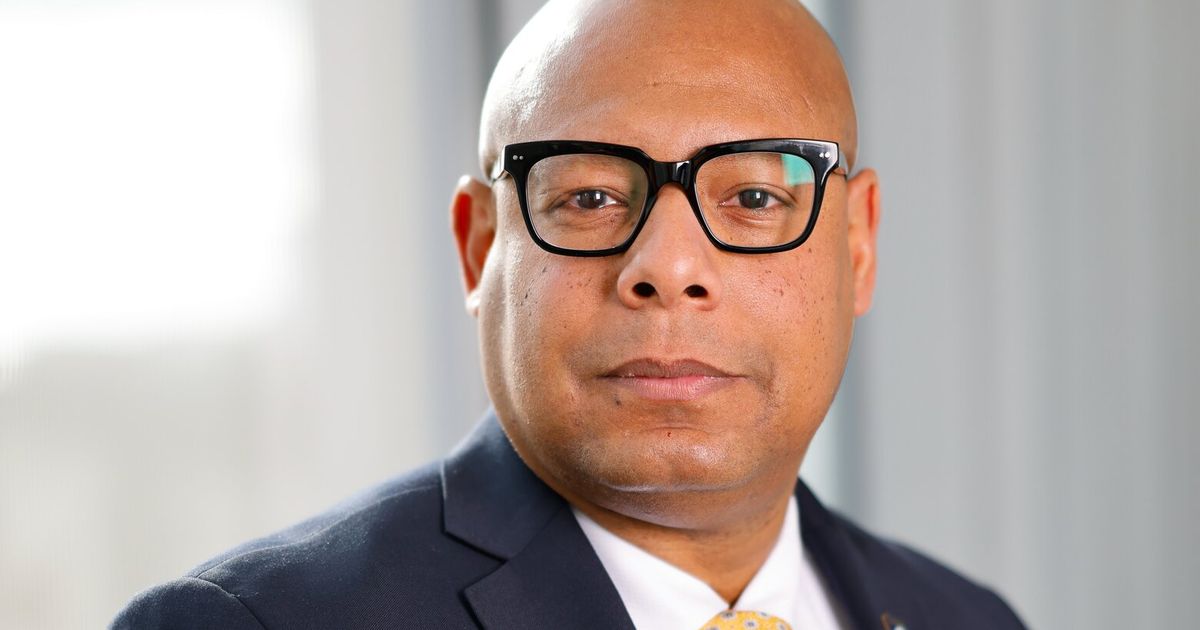
As a former public high school history teacher, I’m reminded that the concept of the “first 100 days” in public office carries weight. It was President Franklin D. Roosevelt who, in the depths of the Great Depression, set a new precedent by moving swiftly with bold reforms. That period became a benchmark by which new leaders are evaluated, and today, I humbly reflect on my own first 100 days as chief of police for the Seattle Police Department.
I began my tenure on Feb. 1 with a simple, but urgent belief: that together, with support from Mayor Bruce Harrell, the City Council, accountability partners and our community, we could build a safer Seattle.
Our mission is clear: to serve as compassionate guardians, trusted partners and committed problem-solvers. Over these first 100 days, I embarked on a foundation-building journey grounded in listening, assessment, strategic planning and implementation.
From the outset, I prioritized connection. I met with officers during roll calls and ride-alongs, and joined precinct and neighborhood meetings, business forums and community walks. I focused on getting to know Seattle, including sitting down with community and business leaders and making connections with fellow regional criminal-justice colleagues. These engagements — totaling nearly 300 meetings — helped me identify key concerns, shape priorities and reaffirm our commitment to transparency and trust.
My first 30 days could be summarized by the phrase “a sense of urgency,” with 14-hour days attending classes and studying at the Washington State Criminal Justice Training Commission — completing the Basic Law Enforcement Equivalency Academy and gaining a new friend and committed partner in ensuring our newest recruits are well-trained, CJTC Executive Director Monica Alexander.
My earliest efforts led with transparency and accountability to the public and to our officers — creating an open-door policy with SPD employees, removing access restrictions to our executive floor and encouraging people to reach out directly to ask any and all questions. I believe every voice should be heard and can be instrumental in helping us move forward. The hard truth is that SPD has weathered a difficult five years, marked by leadership changes, staffing losses and shifting public trust. But we are charting a new course.
Our new guiding philosophy is called “Seattle-Centric Policing”— a departmentwide strategy based on three pillars: evidence-based, police-led crime prevention; community and government-led initiatives; and services and support-led efforts.
Seattle-Centric Policing aligns with the key public safety strategies addressed in Mayor Harrell’s One Seattle Restoration Framework — reducing gun violence, preventing high-impact crime, responding to 911 calls, addressing the drug crisis, connecting with our Seattle neighborhoods and taking special care to place a focus on the root causes of crime to better prevent future incidents. These strategies are not just buzzwords; they are key focal points that will be embraced by all of our officers.
SeaStat, our SPD bimonthly meeting series that brings together criminal justice partners, government leaders, educators, and human services providers to share ideas and discuss pressing issues, has been re-imagined under the Seattle-Centric Policing framework. These accountability meetings now focus less on data presentation and more on action, follow-through and shared ownership of results. We are addressing pressing challenges, such as gun violence, juvenile crime and how to help our most vulnerable residents — those battling homelessness, drug addiction and mental illness. During these meetings, our key focus is tackling pressing issues with urgency and collaboration.
Through these 100 days, and looking back even further, there is no way we would be where we are without our dedicated officers and professional staff. To all of you: Thank you. Your resilience and selfless public service during difficult times have not gone unnoticed. I am committed to building a departmental culture that supports your wellness, prioritizes equity and inclusion, and rejects conflict and inequity. We will not allow exclusion or mistreatment to fester. I embrace the mayor’s vision for a learning, growing organization, and we are responsible for creating a workplace where all employees feel safe, supported and accountable.
I understand the road ahead is long, and leadership does not come without criticism. But criticism is the price of having the privilege to lead. I accept it with humility and determination.
From this day on, we are “Policing Forward.” Together, we will become the most innovative, responsive, and community-centered police department in the nation.
This is our promise. This is Seattle-Centric Policing.
If you would like to share your thoughts, please submit a Letter to the Editor of no more than 200 words to be considered for publication in our Opinion section. Send to: letters@seattletimes.com
