

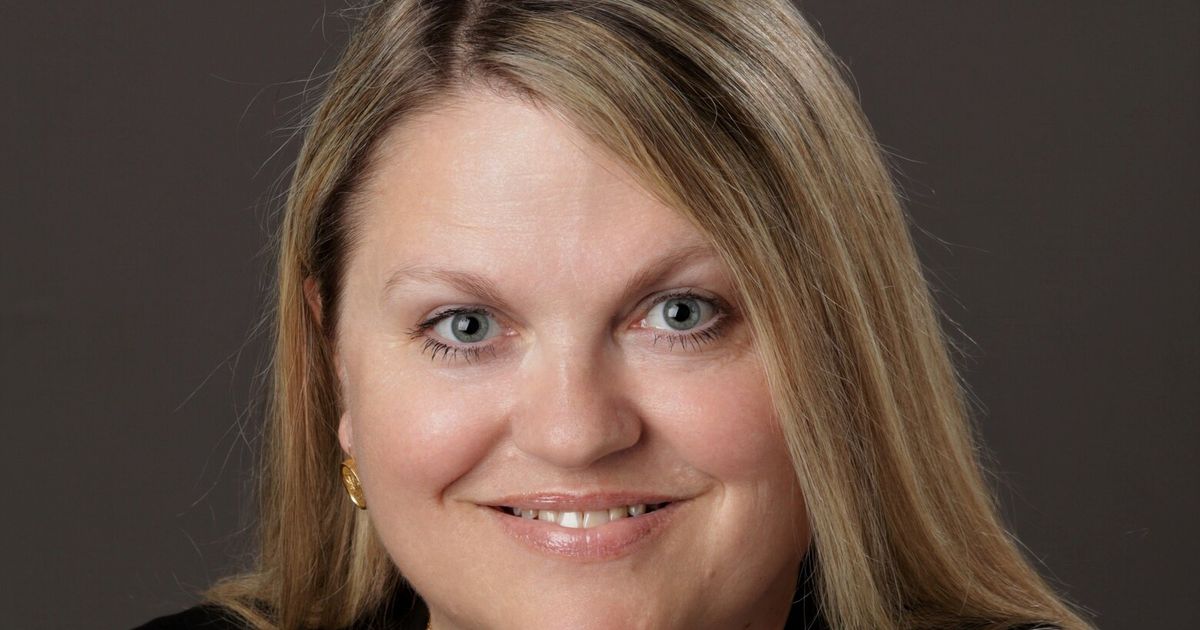
For Position 3 on the state Supreme Court, the editorial board endorsed appeals court judge Michael Diaz.
Diaz fell short of votes in the August primary, leaving two candidates in the general election: Jaime Hawk and David Stevens.
Both hopefuls have established legal careers and plenty of respective supporters. Neither would come to the court with the unbridled enthusiasm of The Times.
As with all things political, this race does not take place in a vacuum but in a national context. A judicial race in the Evergreen State cannot escape the controversies of the U.S. Supreme Court. That is a pity, but it is why we now endorse Hawk.
She is currently a King County Superior Court judge. Previously, she was an attorney for the ACLU of Washington. She has inhabited the left lane of the race.
During the state Democratic convention last summer, her partner, state Treasurer Mike Pellicciotti, led a cheer for her, urging half the room to yell “Judge” and the other half “Hawk,” according to the Washington State Standard.
Such raw and unseemly displays of partisanship in nonpartisan judicial races are rare for good reason. The candidate does not appear to have orchestrated the incident of her enthusiastic partner.
Speaking to the editorial board, Hawk seemed generally supportive of past high court decisions. Which was not a great signal that she would bring needed change.
Unlike retired Supreme Court Justice Barbara Madsen, who believed the court erred when it retained jurisdiction to oversee education funding in the landmark McCleary case, Hawk said the court got it right. She approved the court mandating lower caseloads for public defenders, even as many rural counties say such an unfunded mandate could create havoc on their public safety budgets.
Stevens, on the other hand, agreed with Madsen that the court had overreached in education funding. A former public defender, Stevens said the court’s order on public defender caseloads was made without proper regard for its impact on places like Mason County, where he serves as a Superior Court judge.
But when it comes to judicial philosophy and role models, Stevens is perplexing. He told the editorial board he is a conservative, clarifying when pressed that he meant in a judicial sense, not a political one.
However, in an interview with conservative radio host Jason Rantz, Stevens said it was important for voters to know what U.S. Supreme Court justices the Position 3 candidates would want to emulate. “So my favorite would be Clarence Thomas, second would be Antonin Scalia and Supreme Court Justice Alito … those are judges I really like and follow and I’d hope to be in a similar vein as them.”
When Rantz followed up by asking Stevens if naming the three most conservative justice on the U.S. Supreme Court would lead voters to typecast him as a conservative, Stevens replied: “If adhering to the United States Constitution and Washington (State) Constitution is conservative, then I guess I am.”
It is worth noting that justices Alito and Thomas were the only judges to publicly dissent last week as the U.S. Supreme Court rejected President Donald Trump’s recent effort to restrict mail-in voting in this year’s midterm election.
When the very future of democracy is at stake, it’s best to be careful about one’s role models.
For Position 3, voters ought to choose Hawk. We remain hopeful that she will be open to the views and experiences of all Washingtonians, and develop an independent voice.
