

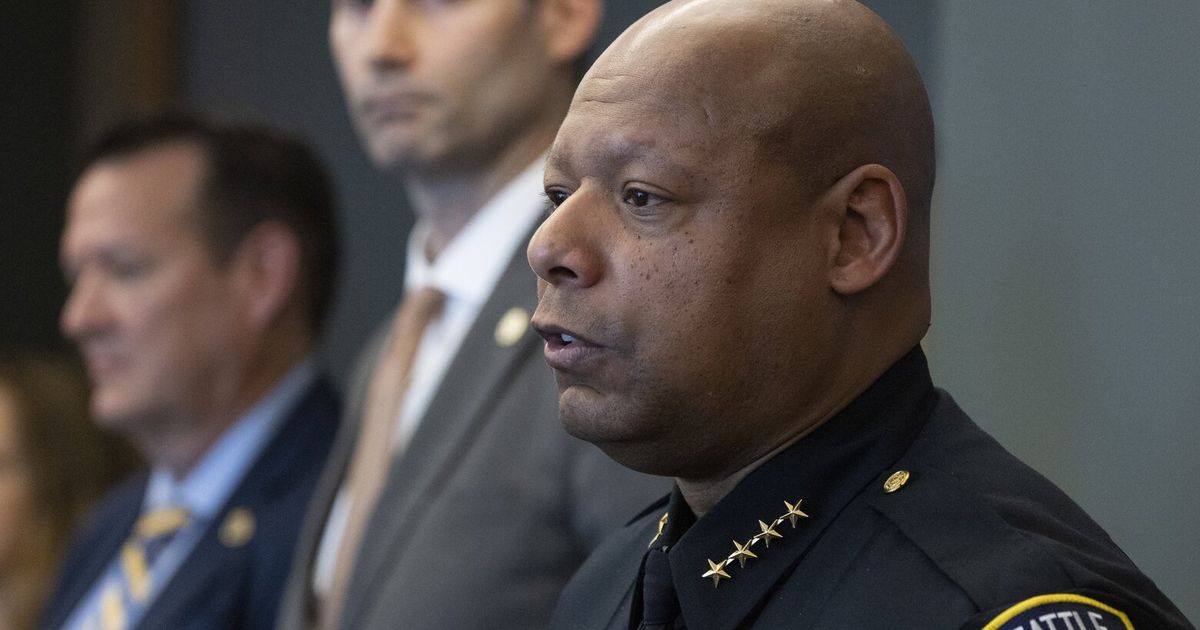
When interim Seattle police Chief Shon Barnes made the startling statement during his confirmation hearing this week that he expects he “will probably go to jail” for “defending” Seattle residents’ First Amendment rights against the overreach of the federal government, it was a moment that should have set off more than just alarm bells.
Some might interpret this as a display of courage; however, the reality is far more perilous.
Chief Barnes commented on June 10 before the council’s Public Safety Committee that he would “do everything in my power to protect anyone in Seattle from anyone who comes to the city with the intention to hurt them or inhibit their First Amendment rights.” He added that this could mean jail time because “we have an administration that has threatened to jail politicians … and has threatened to jail a governor.”
Those are consequential words, especially as the federal government seizes control of the National Guard and deploys Marines to Los Angeles, projecting military force into American cities. Chief Barnes’ comments may excite Seattle’s activist core and its historically performative City Council, but they do nothing to protect actual people on the streets. Instead, his words give the federal government what it wants: public defiance they can use as justification to escalate.
Let’s be brutally clear: Seattle lacks the power and resources to resist military occupation. Troops answer only to the federal chain of command. All Chief Barnes is doing is baiting the administration with heavy public rhetoric, knowing full well the stakes could include arrest or worse. That is political theater, and Seattle residents will be collateral damage.
Chief Barnes said in his confirmation hearing that “if there are protests in Seattle, we can handle it.”
History disagrees.
Most recently, SPD’s actions during a protest and counterprotest at Cal Anderson Park once again raised serious concerns about judgment, tactics and bias. Likewise, Seattle and its people already have a federal target on their backs for their handling of protests in 2020; leadership should bear that in mind when shouting “come at me, bro” at an administration that has embraced vengeance as a priority.
Chief Barnes and city leaders can, and should, challenge the federal government in court. They can file lawsuits, build coalitions and coordinate legal resistance. They should work with the governor to ensure the National Guard remains under state control.
That is how governments protect rights, through strategy, not showmanship. When city leaders provoke the federal government, they risk triggering the very military response that threatens states’ rights and the safety and liberty of the residents they are responsible for. When Seattle officials or Chief Barnes pretend moral performance is proportional to the power of the United States government, including the military, they escalate public tension and invite the administration to target everyone who lives or works here.
Chief Barnes said the deployment of Marines to L.A. is not warranted, but his posturing will not deter deployment to Seattle; careful planning might limit damage, and he needs to demonstrate that he is capable of that level of leadership.
If sanctuary status alone invites military occupation, we need to rethink how we protect undocumented residents, instead of throwing incendiary flash bangs at the federal government; that’s not de-escalation. When Chief Barnes, in a high-profile hearing, declares his willingness to go to jail, what he is really saying is that this city is open to military confrontation. If Barnes wants the job permanently, he must shift from incitement and performance to strategy.
Seattle residents, including our undocumented friends, family and neighbors, deserve leaders who understand the limits of their authority and prioritize the real lives at risk.
Until then, Seattle remains alarmingly vulnerable, and every time a leader flirts with escalation, it is our neighborhoods and our people, regardless of citizenship status, who will pay the ultimate price, not Shon Barnes.
If you would like to share your thoughts, please submit a Letter to the Editor of no more than 200 words to be considered for publication in our Opinion section. Send to: letters@seattletimes.com
