

What is the welfare state America wants, and what is the one it can afford? This is not a question Americans are ready to discuss — so much so that their elected officials have shut down the government to avoid it.
Since the 1960s, the U.S. welfare state has grown to cover not just the poor but, increasingly, the middle class. When there is a temporary economic hardship, it tends to be used as an excuse for a permanent expansion of social insurance programs. In the broadest terms, this phenomenon explains the current shutdown.
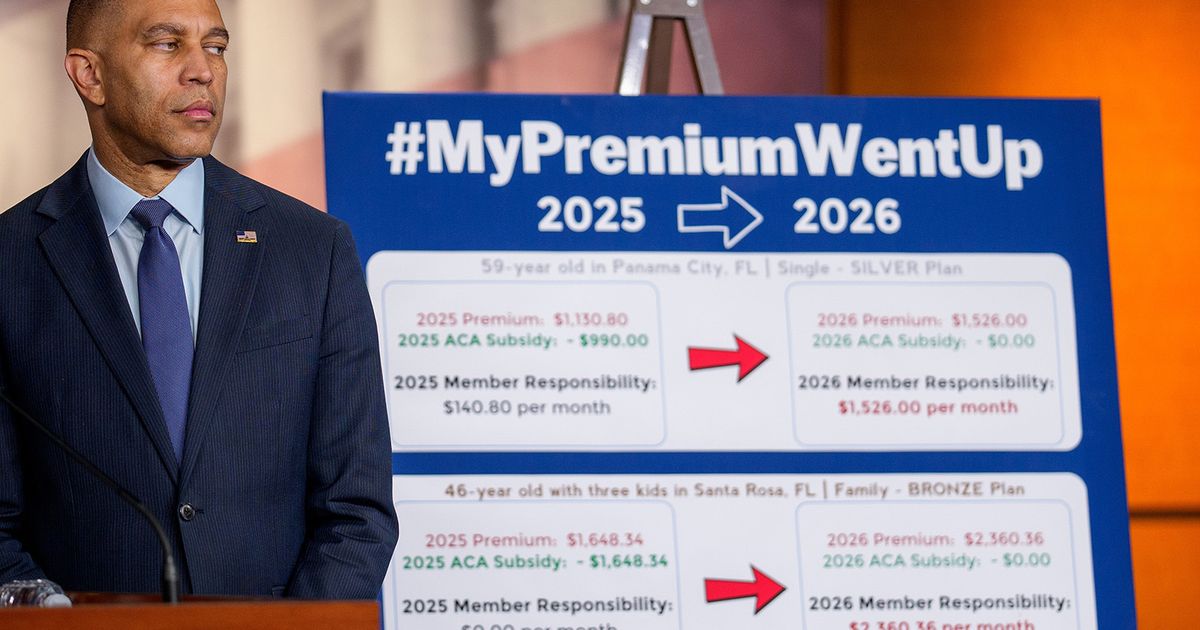
In 2021, during the pandemic, the American Rescue Plan increased the subsidies available to people to buy health insurance on the exchanges created by the Affordable Care Act. Designed to ensure that their premiums did not exceed a certain percentage of their income, the original subsidies were available only to those who earned less than 400% of the federal poverty level. The 2021 law eliminated the 400% requirement and lowered those income percentages significantly. The more generous package was presented as an emergency measure to ensure everyone had insurance during a health crisis, and is set to expire at the end of this year.
Democrats want to make the subsidies permanent, and Republicans don’t. In a sense, the parties have switched sides: Last spring, it was Republicans who wanted to extend a program that was set to expire at the end of the year — the tax cuts passed into law in 2017. Democrats view entitlements in much the same way Republicans view tax cuts: Once in place, they become so popular they can’t be taken away.
And the subsidies are very popular, even though most Americans don’t get them because they have Medicaid, Medicare or employer-provided health insurance. The subsidies did make the exchanges more popular. Since 2021 the number of Americans enrolled in the marketplace increased from 11 million to 24 million, and 92% of them receive some subsidy. If the enhanced subsidies end, everyone on the exchange will face higher premiums — and not just because they will have to pay more out of pocket. Healthier people who don’t use their insurance will drop out of the market, and the Congressional Budget Office estimates that this less favorable pool will increase insurance premiums by 7.6%.
The subsidies proved to be a more popular way to encourage people to buy insurance than the individual mandate, which was eliminated in 2019, because people prefer tax credits to a requirement to buy something they don’t want. But subsidies are not cheap: The CBO estimates they will add $350 billion to the debt over the next 10 years. In an ideal world — where the federal debt was not enormous, interest rates weren’t higher, and the population wasn’t aging — they may be worth the cost. Who doesn’t want cheaper health insurance?
But the U.S. can’t afford to keep expanding the size of its welfare state. True, some European countries have very generous middle-class benefits, including government-provided health care. Many European governments, reflecting the preferences of their citizens, chose safety and security — in the form of a bigger welfare state and higher taxes — in exchange for less growth. Europeans — and not just the rich — also pay much higher taxes.
Even so, their choice may not be tenable for much longer. Plagued by high debt and low growth, many European countries have proposed modest cuts to welfare spending and are finding it difficult.
No matter the continent, governments face trade-offs. Gone are the days when they can respond to every crisis by permanently expanding entitlements. Instead, they need to use a crisis as an opportunity to reform the welfare state.
When it comes to health insurance in the U.S., that means fewer patchy benefits for the relatively affluent and better-designed and more comprehensive benefits for the needy and unlucky. There’s no doubt health care is getting more expensive for many Americans and is a strain on many families.
There is also lots of support for the notion that every American deserves affordable health insurance — public, private or some combination thereof. That will require higher premiums, higher taxes, or cutbacks in other programs. Adding more unfunded subsidies is not a sustainable solution.
Better and more accessible health insurance for everyone is a worthy goal. But it is not free.
