

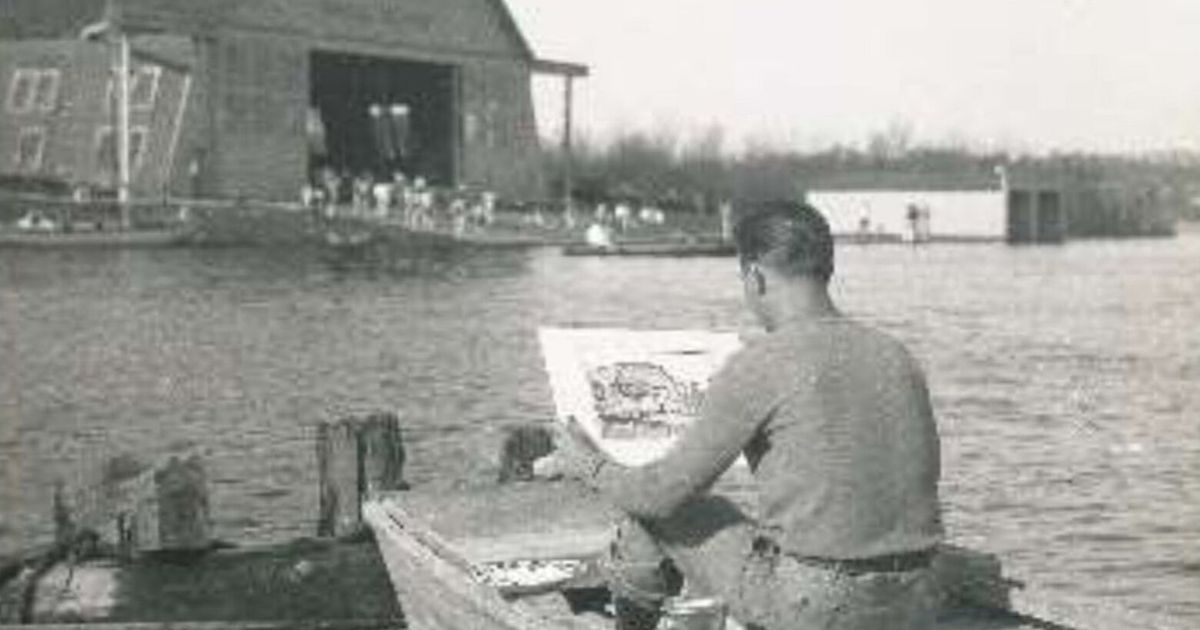
The ASUW Shell House in Seattle is the birthplace of the 1936 Olympic gold-medal crew team, the last surviving World War I naval seaplane hangar in the country and the only one to become a collegiate rowing sanctuary and Olympic training center. Architecturally, the Shell House is a unique Pacific Northwest landmark.
Today, that legacy is in danger.
Why? The University of Washington has proposed defacing alterations that are now under review by the Seattle Landmarks Board. If this plan proceeds without substantial changes, Seattle will lose what makes this building nationally significant — its original architectural form, living history and historical relationship to the lake.
Built in 1918 for the U.S. Navy and repurposed for UW student use as a boathouse in 1919, the Shell House has stood for over a century as a symbol of service, ingenuity and excellence. From its days housing early naval aircraft to its transformation into a rowing shell house, it is steeped in American history. This is where George Pocock crafted racing shells in his upstairs workshop, and the famed “Boys in the Boat” launched into the Montlake Cut from the large, water-facing hangar doors.
The University of Washington’s proposed alterations to key exterior features of the historic structure, especially the UW’s intention to remove the two massive hangar doors in the center and replace them with a permanent glass and metal wall, would destroy the architectural integrity of the 107-year-old structure.
Unfortunately, the UW’s stated goal for the UW Shell House rehabilitation project, which is to “Preserve the unique features of the structure including the exterior presence, exposed wood timbers, impressive hangar doors, and grand scale,” is not being met in a historically accurate and honest manner.
The Shell House is a designated Seattle landmark and was recognized in its nomination under all six designating criteria. The UW’s failure to undertake a rigorous and independent evaluation of the historic character of defining elements as a potential National Historic Landmark, sadly, could disqualify it for such high status forever.
Historic preservation aims to maintain a building’s original character and integrity. The common adage, “better to maintain than repair, better to repair than replace,” emphasizes the importance of proactive measures in preservation rehabilitation to first prevent damage, make repairs to restore functionality where feasible and finally, where building features such as windows and handcrafted doors have been severely damaged due to age, weather and deterioration, the obligation is to make in-kind replacement of those features.
The Seattle Landmarks Board, responsible for protecting the city’s local historic landmarks, will decide soon on the UW’s proposed modern modifications to the historic building. The board must not allow Seattle’s world-famous ASUW Shell House to fall victim to another act of preservation desecration.
The Shell House is the site where early Indigenous cultural presence and student athletes intersect, each contributing to its historic character. It is our national treasure. Its future use depends on honoring its past.
We concur that the Shell House must be updated to meet current building codes, accessibility and weatherization standards. However, what is most needed is meticulous rehabilitation rather than reinvention. With thoughtful restoration, this precious building can continue to serve students, welcome school tours, host educational programs and gatherings, inspire, and remain open to the public for another 100 years.
We strongly encourage the Seattle Landmarks Board to heed the collective voices of preservation advocates, supporters and donors calling for the authentic restoration of the Shell House.
We call upon the UW and Landmarks Board to honor the preservation mandate to maintain, protect and preserve key historic features of the exterior, interior and site, and delay as necessary the issuance of a certificate of approval until a more historically accurate and sensitive rehabilitation plan for the exterior is presented by the UW for approval.
Information on Seattle Landmarks Board meetings is here: st.news/agendas
