

This week, public health detectives in Michigan got their first big lead in the cyclosporiasis outbreak that has sickened thousands of people in the state amid a broader national surge. Initial evidence suggests contaminated lettuce or salad greens could be driving infections — though authorities caution that other food sources can’t be ruled out.
It’s a welcome break in the race to identify the source of the foodborne infections. It also highlights the painstaking work it takes to detect, trace and research pathogenic threats — an effort that relies on a robust, well-funded public health system. Yet that infrastructure under Health Secretary Robert F. Kennedy Jr. has felt increasingly fragile. Today the parasite cyclospora is the problem, but tomorrow could be an even worse threat.
Over the past few weeks, as infections multiplied in Michigan and popped up across more than half the country, people naturally began eyeing their food with suspicion. Will the sprinkle of cilantro on my taco be my downfall? Should I skip the shredded lettuce on my fish sandwich? Given the grim firsthand accounts of cyclosporiasis — days spent tethered to the toilet with painful cramps and relentless diarrhea — that wariness is understandable.
As of this week, Michigan alone had recorded more than 3,300 cases and several dozen hospitalizations. Illinois, New York, Ohio, North Carolina have each reported several hundred cases so far, and many other states have had at least a handful of infections. By Tuesday, the CDC had counted nearly 7,000 confirmed and suspected cases — surely an underestimate since it only includes people who get tested.
There is some reassuring news, to be sure. While several dozen people have been hospitalized in Michigan, no deaths have occurred. And doctors already have tools to help those infected, including screening tests and antibiotics that can help people feel better quickly. What’s more, the cyclospora parasite isn’t thought to spread between people — which means identifying the source of the outbreak could bring it to a swift end.
Yet for the disease detectives on the case, determining the food culprit is maddeningly difficult. People typically don’t get sick for a week or more after exposure. And when symptoms finally kick in, people often blame what they had for dinner the night before rather than thinking back to what they ate earlier — what public health experts call “last meal bias.”
It gets even trickier because people infected with cyclospora might feel better after a few days before getting sick again, explains Melanie Firestone, an epidemiologist and food safety expert at the University of Minnesota. That means they might not go to the doctor for several weeks after exposure, and the results from a test for various pathogens can take another few days to come back. Only then are local health authorities finally looped in.
Investigators have to get people to dig deep to capture everything they might have consumed that made them sick with the hope of finding commonalities — say, everyone ate at the same fast-food chain or bought the same brand of bagged lettuce.
That’s an exhaustive effort. Before notifying the public that lettuce might be behind the outbreak, public health authorities in Michigan reportedly conducted more than 1,000 interviews, even going so far as to pull records from infected people’s grocery store shopping cards, the state’s chief medical executive, Natasha Bagdasarian, told Michigan Public.
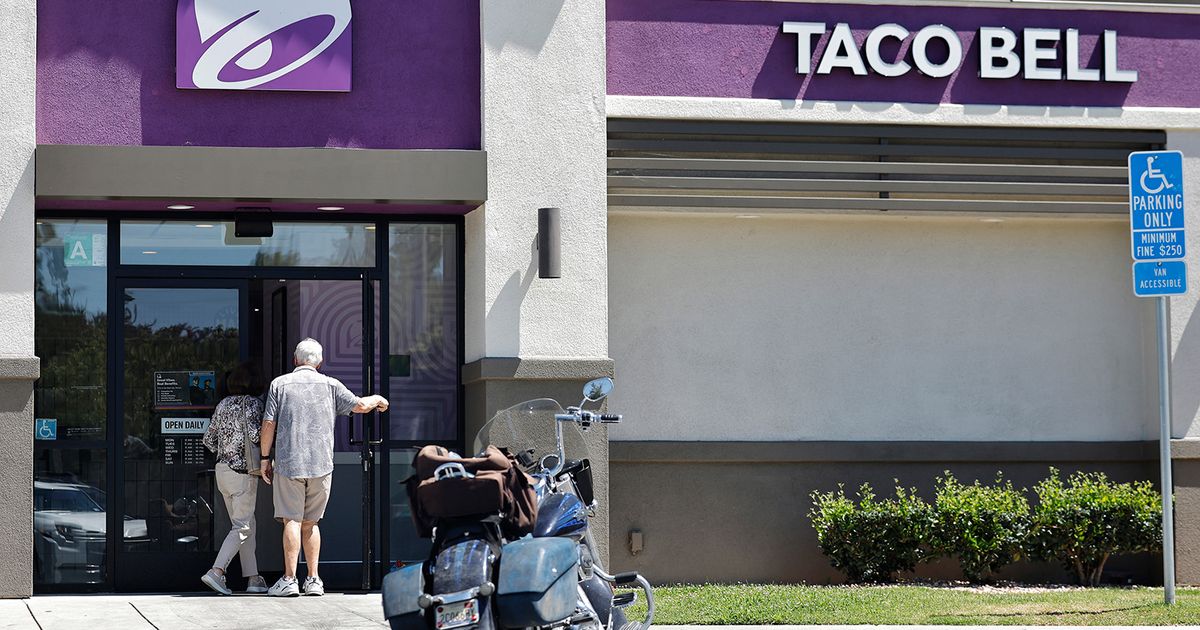
Yet their work is far from complete. Even if lettuce is eventually confirmed to be the vehicle for the parasite, researchers still don’t know where the contaminated greens are coming from. Taco Bell is reportedly being looked at as a potential source of exposures, and the chain has pulled certain ingredients as cases multiply.
That same work is being replicated in states all over the country. It’s still unclear if Michigan is the epicenter of a broader outbreak wreaking havoc on Americans’ digestive tracts, or if multiple things are occurring at once. Then, even if the source is discovered, researchers still need to know how the parasite got into the food system in the first place. That’s vital to lowering the chances of another big outbreak from occurring.
The bottom line: The work is gargantuan, and can only happen with sufficient federal support. A recent analysis by Firestone and her colleagues underscored that point: States that received federal dollars through various food safety surveillance programs did a better job detecting foodborne outbreaks. The researchers believe that wasn’t just because they were participating in nationwide networks, but because they were more likely to follow evidence-based practices for tracking disease.
Yet the Centers for Disease Control and Prevention, which provides the majority of state health authorities’ funding, has over the last year been subject to brutal cuts under Kennedy — cuts that included a piece of the system that keeps tabs on foodborne pathogens.
Food experts tell me that might not have directly impacted detection of this cyclospora outbreak, but it could make it harder to learn from this one. Chipping away at any part of the network that keeps Americans’ food safe makes the whole system weaker.
We should be able to go to the grocery store or the drive-through without fear — not just of this illness, but of hollowed-out safety systems that are too weak to prevent the next one.
©2026 Bloomberg L.P. Visit bloomberg.com/opinion. Distributed by Tribune Content Agency, LLC.
