

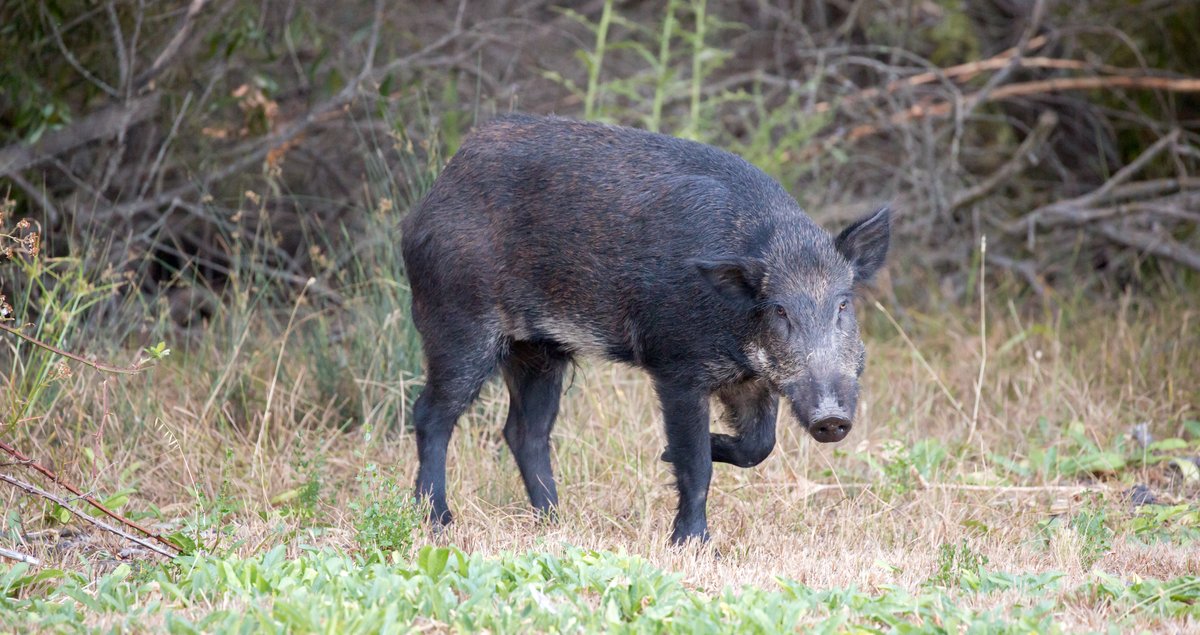
The federal government is injecting millions of dollars into efforts to combat feral hogs—and it’s considering spending even more in the coming years. The problem has grown for decades, but our research has found that a recently revived federal effort offers the potential for bringing the hogs under control.
Feral swine roam in 35 states, according to the U.S. Department of Agriculture. The most recent population figures, from 2016, estimated that 7 million feral pigs were loose in the nation then. That number may be much higher today: Feral hogs breed year-round and each year can produce up to two litters of four to 12 piglets per litter. Feral hog populations have been estimated to be able to double in just four months.
The U.S. Department of Agriculture estimates that wild pigs do between US$2.5 billion and $3.4 billion in property damage each year. At least $800 million of that is destruction of crops.
On supporting science journalism
If you’re enjoying this article, consider supporting our award-winning journalism by subscribing. By purchasing a subscription you are helping to ensure the future of impactful stories about the discoveries and ideas shaping our world today.
Beyond crops, feral hogs spread disease to livestock, damage farm infrastructure such as fences and roads needed for agricultural production, destroy recreational parks and cause extensive environmental damage to wildlife habitats, water quality and plant ecosystems.
They’re hard to control because feral hogs roam across large areas of privately owned land. If neighboring landowners don’t work together, the hogs just move rather than being killed or contained. Basic economic theory says landowners would wait for others to spend the time, money and energy to control hogs—which means nobody does, and the problems grow.
In the 2018 Farm Bill, a major piece of legislation covering wide areas of agricultural policy, Congress agreed to spend $75 million to encourage private landowners to step up together to kill feral hogs.
That program was active in selected counties in 10 hog-plagued states: Alabama, Arkansas, Florida, Georgia, Louisiana, Mississippi, North Carolina, Oklahoma, South Carolina and Texas. Starting in 2020, the U.S. Department of Agriculture funded private landowners’ purchases of trapping equipment, on-farm trapping efforts and restoration of land the hogs had damaged.
Originally slated to end in 2023, the program was given $105 million more to spend through 2029 in the major budget and immigration package Congress passed in July 2025. Through Sept. 21, 2026, the government is accepting grant applications for the first $35 million allocation from that money.
The Farm Bill that has passed the House and is awaiting debate in the Senate would increase that funding by $150 million and extend the effort through 2031.
A useful question, before spending all that money, is how effective the first test of the program was.
Our research team of agricultural economists at the University of Tennessee and the University of Arkansas set out to examine the program’s performance.
We used federal data on crop insurance claims to compare crop damage in counties where the program was active against counties where it was not, both before and after the federal trial began.
Not all the counties reported crop damage from wildlife. Among those that did, counties where the program wasn’t operating had crop insurance claims for wildlife damage to corn that averaged 70 acres (17.5 hectares) per policy.
In counties where hog eradication efforts were coordinated, however, the average claim for cornfield acres damaged from wildlife declined to 10 acres per policy. That is a statistically significant result – and given the scale of corn production across the study region, it represents a meaningful reduction in losses.
When comparing crop insurance claims for soybeans, wheat, cotton and peanuts, however, we found no difference between counties with active hog control efforts and those without.
Corn is reportedly the crop most commonly damaged by feral swine. That could help explain why we found cornfields to have the only statistically significant reduction in damage.
More generally, the program’s effectiveness may have been more limited because it launched during the COVID-19 pandemic, which restricted the community meetings and public outreach that could have boosted landowner participation. Also, the fact that it was a pilot effort may have made people reluctant to commit, fearing the program might disappear in a few years.
It is likely our study underestimates the benefits of the program. Some farmers have crop damage that is not severe enough to warrant an insurance claim, so those numbers are excluded from our analysis. And our study did not evaluate any potential changes in noncrop damage from feral hogs, such as to property, livestock, recreational parks and the environment in general.
Our research indicates the hog control program can be effective and offers several ideas for improving it, both over time and with more funding. For instance, if the efforts focused specifically on corn-producing counties, it might yield more success per dollar invested. And expanding participation through additional outreach efforts could mean more hogs are caught or killed across a wider area, amplifying the return further.
Feral hogs will be nearly impossible to eradicate completely, and the damage they cause isn’t going away either. The data suggests that with the right design and sustained investment, the federal government has a program that can make a real difference for America’s farmers.
This article was originally published on The Conversation. Read the original article.
