

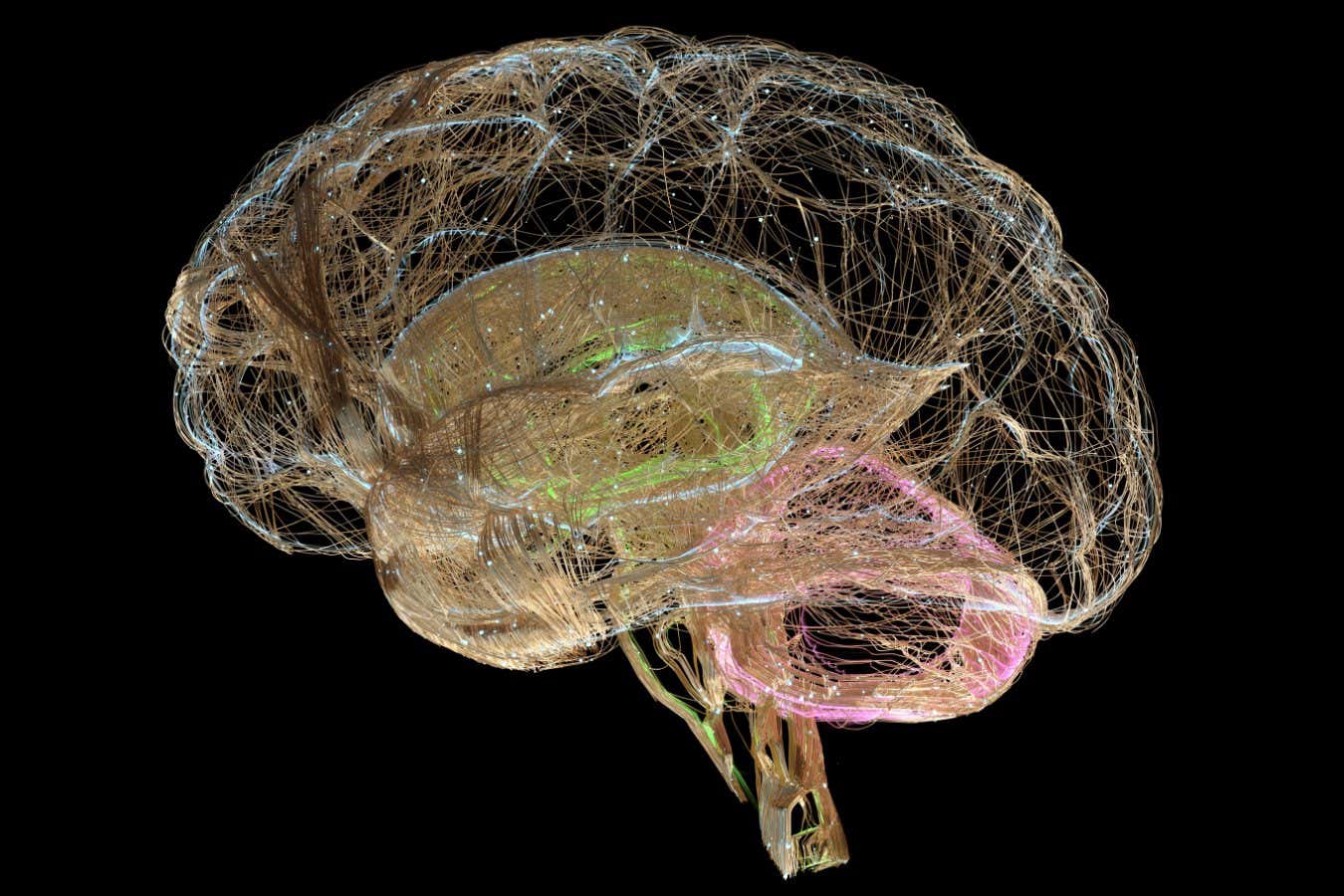
The human brain is one of the most complex objects to have ever existed
Andriy Onufriyenko/Getty Images
Science books, especially those written by scientists, sometimes have the reputation of being dry, dull and difficult. Perhaps they are thought of as thinly disguised textbooks, something to learn from in a structured way. The books on the shortlist for the Royal Society Trivedi Science Book Prize are testament to the fallacy of this view, and none more so than the one the judges picked as this year’s winner: Our Brains, Our Selves by neurologist Masud Husain.
I was fortunate to be chair of a panel of six – all readers and lovers of books, including New Scientist’s news editor Jacob Aron – who had the difficult job of choosing the shortlist and then the final overall prizewinner. Composed of passionate advocates for science, our discussions were wide-ranging and fascinating, as you might expect of a set of people who love both science and books.
We often disagreed, always politely, and I’ve rarely been with a set of people who listened so well to opposing points of view. Our very different starting points and lived experiences meant we learned so much, both about the books we were privileged to read and about reading itself.
There were many excellent science books among this year’s entries, but Our Brains, Our Selves stood out for its combination of beautiful storytelling, rigorous and cutting-edge science told in an engaging way, and, above all, its humanity. Husain is a neuroscientist, but also a clinician: seven of his patients’ stories make up the chapters of the book.
Their conditions vary – one individual is overcome with apathy after surviving a stroke; another believes she is having an affair with her own husband – but they all lead to profound changes. The book is a beautiful exploration of how pathological problems in the brain can cause people to become completely different, such that they are rejected by society.
The golden thread running through the book is the concept of “self” and how the brain influences who we are. It is very empathetic, told in a wonderful way and from a very personal perspective. The science is all there too – much of it based on Husain’s own research, all explained very clearly, with the things we don’t know still clearly highlighted. This is something I appreciate. Too often we expect science to have all the answers, but really the best science is the science that prompts us to ask the next exciting question.
The format of case studies from a clinical practice might seem tried and true, but the difference here is that golden thread, with a truly personal touch. Have you ever felt excluded from belonging? The stories of these patients with brain disorders force the reader to think about identity and the concept of self, and what “belonging” means to us both as individuals and as members of society.
That idea resonated with us as a panel. We all considered, what does it mean to belong? Several of the people we meet in the book are members of immigrant communities (as is the author himself) who have had to overcome prejudice, resentment and sometimes even violence to belong to the society in which they found themselves. As our world becomes ever more connected, it seems logical that our fear of difference ought to diminish, but sadly it seems that isn’t the case.
Our Brains, Our Selves really makes the reader think about how disorders of the brain can cause people to change profoundly such that they no longer belong, but also how cognitive functions contribute to our own identities. Our brain really does determine who we are. This very compassionate book not only effortlessly teaches the reader about the science but is also full of incredible human kindness.
Sandra Knapp is a plant taxonomist at the Natural History Museum, London. She chaired the judging panel for this year’s Royal Society Trivedi Science Book Prize. The winner of the prize is Our Brains, Our Selves, the latest pick for the New Scientist Book Club.
Topics:
