

Medical advances have changed childbirth – potentially enough to impact human evolution
FatCamera/Getty Images
Women’s pelvises have become narrower over the past 150 years, according to a study of over 8000 people from three countries. There are many factors at play, but whatever the ultimate cause, it is the latest piece of evidence leading researchers to rethink the “obstetrical dilemma”, a description of the warring evolutionary pressures on pelvis size: the need to accommodate babies’ large heads drives pelvises to widen, but the need to walk bipedally pushes them to narrow.
We don’t know exactly what is driving this change, or all the ways it will affect people’s health. But if pelvises continue shrinking at this pace, it could make Caesarean sections more likely – which could have a host of knock-on effects.
Maciej Henneberg at the University of Adelaide in Australia and his colleagues reanalysed an existing dataset of 1247 Australian women, born between 1900 and 1984, and found that pelvic width decreased by 0.42 millimetres per year. Likewise, among 3486 Polish women, pelvis widths decreased by 0.47mm per year between 1880 and 1970, and among 320 Mexican women pelvis width shrank by 0.42mm per year between 1900 and 1970. In the same time periods, average height increased and shoulder width either held steady or increased.
“Given that in these different regions, it evolved in the same direction, even though body height increased, I personally find this convincing,” says Philipp Mitteroecker at the University of Vienna in Austria.
“The dataset is fantastic,” says Lia Betti at University College London.
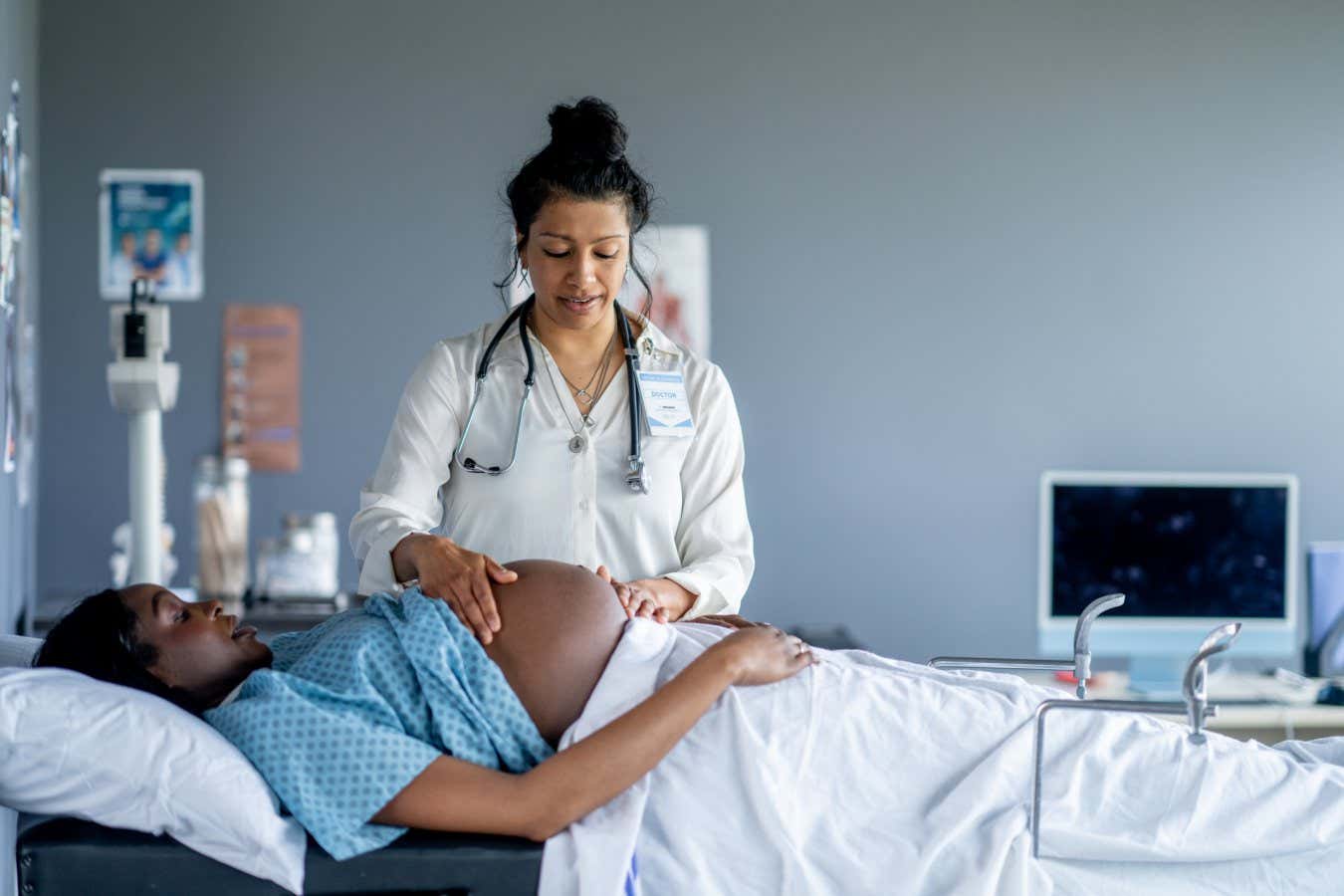
For Henneberg, this finding shows that modern medicine is weakening natural selection’s impact on the human pelvis – and especially on the width of the birth canal. In the past, if a baby was too large or the birth canal was too narrow, both mother and baby would probably die in childbirth. However, safe and effective Caesarean sections, or C-sections – in which the baby is removed surgically through the abdomen – mean this evolutionary pressure is reduced. As a result, birth canals and pelvises can become narrower.
Mitteroecker also thinks C-sections are changing the evolutionary pressures at work on the human birth canal. He predicted that this might drive pelvises to narrow in a 2016 analysis, and says this is the latest iteration of a long-standing phenomenon.
“Midwifery is old,” he says, and “really unique to humans”. Women have been getting help with childbirth, often from other women, for hundreds of thousands of years. This cultural practice has relaxed the selection pressure on the pelvis and birth canal – so our behaviours have affected our own biological evolution. “C-section is, in a way, an extreme form of that,” says Mitteroecker.
However, Betti is sceptical that C-sections are the main explanation for the recent change in pelvic width. She points out that humans got a lot taller in the same time frame, but that is probably due to diet and better healthcare – not an evolutionary change in our genes.
“We know that diet can affect the pelvis,” says Betti. When nutrition is scarce, our developing bodies tend to allocate more nutrients to certain organs, including the brain, at the expense of others. But now we have ample nutrition, so our bodies may have reallocated nutrients. “So we end up with different body proportions,” says Betti. “That’s quite possible.”
Finding an explanation for our narrowing pelvises could help us understand why human childbirth is so difficult – which brings us back to the obstetrical dilemma. However, the exact nature of the dilemma has been disputed. In a 2024 study, Mitteroecker and his colleagues found that the pelvic floor, not walking, was probably the key driver towards narrowness: wider pelvises increase the already high pressure on the pelvic floor, boosting the risk of prolapses and incontinence.
Or both influences could be at work. A study of 31,000 people, published in April, linked wider pelvises to easier births, but also slower walking and a greater risk of pelvic floor conditions.
There could be even more influences in this dilemma. Betti notes that doing competitive sports as a child can also affect the size of the pelvis and argues that our pelvises are sensitive to many factors in the environment, such as temperature. Other researchers have described a “new obstetrical dilemma” linked to rising rates of obesity, which can make babies larger. The real answer is probably some combination of factors, says Betti: she says some researchers have rebranded the dilemma as a “multifactor pelvis”.
Narrower pelvises will affect human health. They will make vaginal childbirth more difficult, potentially leading to even more C-sections. “Who knows how long it will take to get to the state that there will be no children born naturally?” says Renata Henneberg, part of the team behind the new research and Maciej Henneberg’s wife.
At the same time, narrower pelvises may reduce the risk of pelvic floor problems, which can be very harmful. Childbirth, says Betti, can have “very unpleasant, long-lasting effects, which can affect very negatively the life of a woman”.
However, she says predicting what will happen is difficult, again because so many factors are in play: people are having fewer children, which might reduce the risk of injury, but they are also having them later. “A lot of things have changed at the same time,” she says.
Topics:
