

This August marks 80 years since the United States detonated two atomic weapons over Hiroshima and Nagasaki, Japan.
This gets a lot of attention in history books and the media, as it marks the end of World War II and the United States’ ascendance to nuclear superpower status.
But a little-known fact, not featured in textbooks and media, is the sheer number of unnamed, unacknowledged people who suffered the consequences of the Atomic Age.
One example: 70,000 Koreans were victims of the bombings. After the Japanese Empire colonized Korea, hundreds of thousands of people were forced to work in mines and factories in places like Hiroshima and Nagasaki during wartime. Estimates state that about 30,000 Koreans in those cities survived the initial blast.
The U.S. government has never offered acknowledgment, apology or recompense. Survivors and their descendants continue to press the U.S. and Japan for justice and recognition.
I recently visited Hapcheon, South Korea, to attend events commemorating these victims. Because of the many bomb survivors and descendants living there, Hapcheon is called the “Hiroshima of Korea.”
While the bombings happened long ago, the residents of Hapcheon continue to live with the fallout. Exposure to acute radiation breaks apart strands of human DNA, literally shredding the building blocks of life. Atomic bomb survivors, and as many believe, their children are many times more likely to develop cancers, specifically thyroid cancer and leukemia, than the general population.
I first learned of the plight of the Korean A-bomb victims after a delegation visited Seattle in 2023. Early this year, another delegation, including first-generation survivor Park Jeong-soon, 92, shared their pain and desire for a formal U.S. apology. Park will be a plaintiff in the 2026 International Peoples Tribunal on the 1945 Atomic Bombings, in New York City.
During my time in South Korea, I heard testimony at the Korean National Assembly from nuclear-impacted communities from around the world, including the Navajo Nation (Diné Bikéyah), the Marshall Islands, French Polynesia, Kazakhstan and the Democratic Republic of the Congo. Representatives spoke of the intergenerational effects of radiation exposure and “nuclear colonialism.”
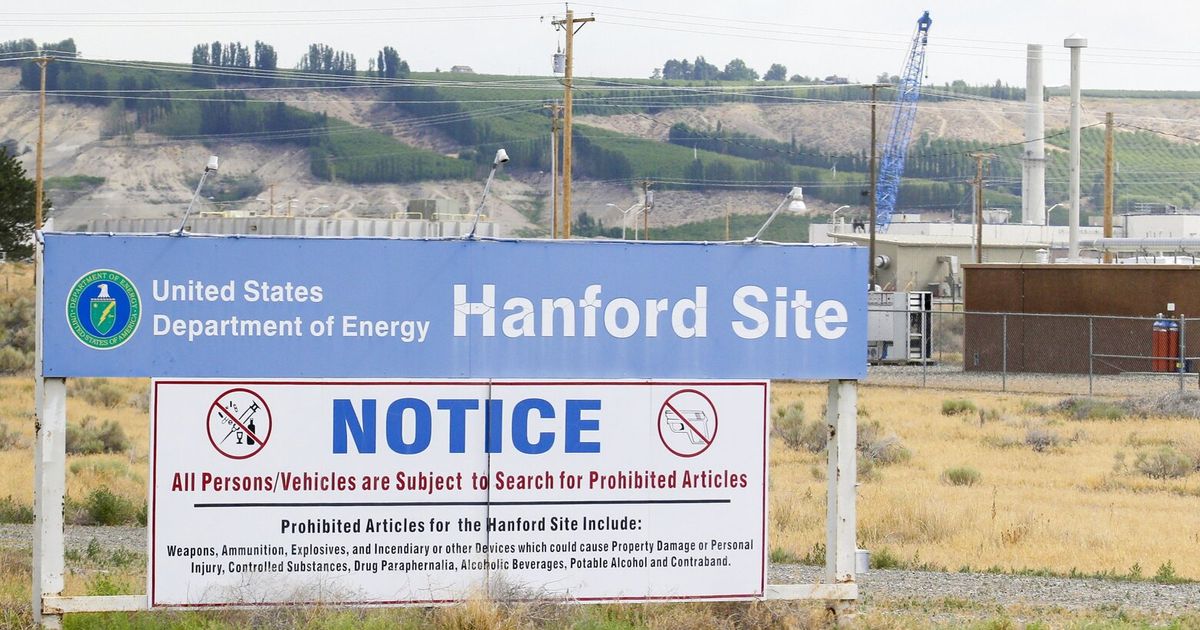
The testimony highlighted yet another untold story — that of the Congolese. The Manhattan Project, the huge undertaking to build the world’s first nuclear weapons — which enriched uranium and produced plutonium at facilities in Hanford and in Oak Ridge, Tenn. — was supplied with uranium from the Belgian-colonized Congo in central Africa. The Belgians were notoriously brutal overlords. In a mine called Shinkolobwe, Congolese people were forced to mine some of the purest radioactive uranium ore by hand, with no safety protection. Birth defects and severe illness are still recorded in the communities near the mine.
Under a campaign of secrecy, Shinkolobwe claimed the first victims of the nuclear arms race. Miners and residents died of radiation exposure. The United States attempted to distance itself from the atrocities committed there by claiming that the uranium from the Manhattan Project came from Canada, but the vast majority came from Shinkolobwe. There are more victims of nuclear weapons than we can possibly imagine.
Meanwhile, the NewSTART nuclear arms control treaty, which caps the deployment of U.S. and Russian strategic nuclear arsenals, expires in February 2026. The Trump administration has yet to appoint a negotiator or enter formal negotiations, and despite Washington state being home to over 1,000 deployed nuclear weapons, only two lawmakers from our state — U.S. Reps. Pramila Jayapal and Adam Smith — have signed on to H.Res 100, expressing alarm at the impending expiration. The U.S. has said it plans to spend over $1.7 trillion on new nuclear weapons in the next three decades. Nuclear weapons, nuclear production and nuclear testing are a war waged in the bodies of its victims through generations, and in the environment at places like Hanford and Chernobyl. Our leaders must do more to prevent another Hiroshima, another Hapcheon and another Shinkolobwe.
