

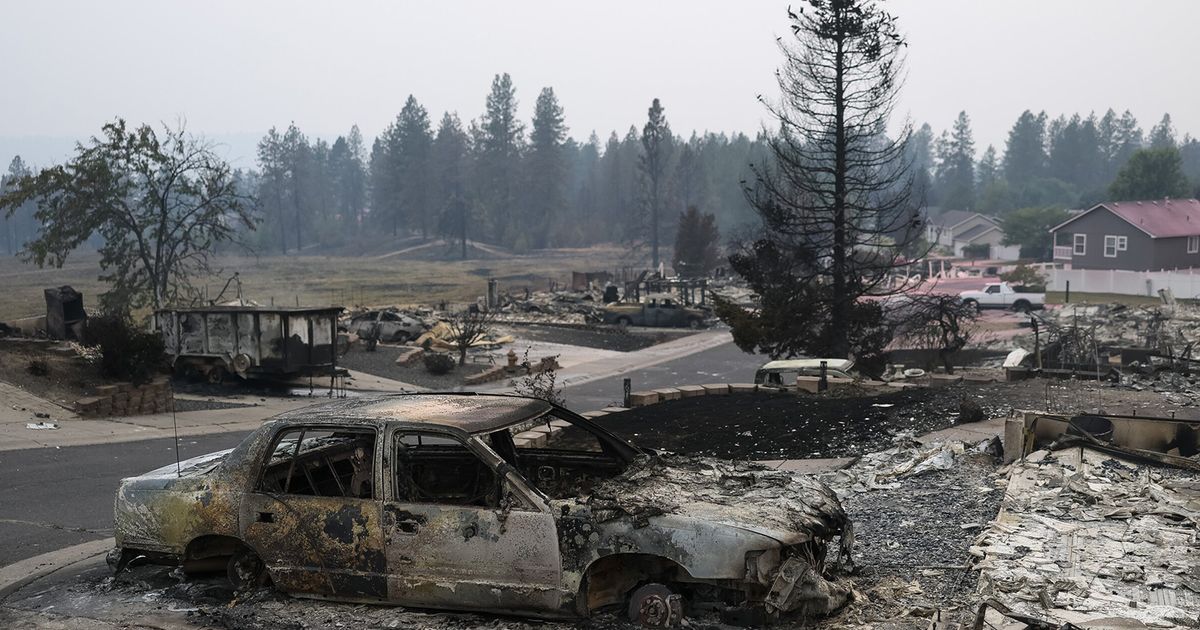
The 2026 wildfire season was already headed for the history books as one of the most destructive in Washington’s history. Then came Saturday. Bone-dry conditions, high temperatures and strong winds whipped up three separate rapidly spreading blazes in Spokane. The combined complex of the Old Trails, Autumn Lane and Fairview fires has already destroyed at least 700 structures and prompted the evacuations of more than 60,000 people.
“Many of the lost homes were identifiable only by the chimneys left standing,” wrote Alexandra Duggan, a reporter for The Spokesman-Review.
With so many reeling from tragedy, it can be easy to overlook the swift and unflinching response that also swept into Washington’s second largest city: the Red Cross volunteers standing up an evacuation shelter within the city’s convention center; police going door to door to ensure residents did not remain in harm’s way; and, of course, thousands of firefighters from across states working to beat back the blaze. Their tireless efforts have undoubtedly saved structures and lives.
Such a unified response can be no accident, requiring planning, preparation and training. So too must be Washington state’s resolve, in taking seriously the increasing risks of wildfire in an era of climate change.
Five years ago, for example, state lawmakers pumped $125 million a year into wildfire response and mitigation. The result built out a fleet of fire-snuffing aircraft that is prepositioned around the state; it funded active management in wildfire-prone forests and reduced the dangerous level of fuels within them; and it pushed into at-risk neighborhoods plans to “harden” residences — actions like removing highly combustible landscaping from areas within five feet of homes.
To be clear, such moves won’t all prevent wildfires. But they can reduce both the risks to lives and the amount of damage inflicted.
Following the events in Spokane, it’s chilling to remember that state lawmakers earlier this year had waffled, for a time, on that wildfire funding. Budget writers restored $60 million in the budget this year. That was the right call.
Washington state also looks likely to get federal help. A bipartisan chorus of local elected leaders appeared successful in getting President Donald Trump’s ear, and with it federal resources to care for the fire complex’s victims and to ultimately rebuild what has been lost.
“He expressed his support for what people are going through out here,” Gov. Bob Ferguson said of his call with the president Sunday.
Those of us west of the Cascades aren’t powerless to help. If you have the means to donate funds to help those who have lost homes, you can do so at the city of Spokane’s H.O.M.E. Starts Here Fund website (or st.news/HOME).
Ferguson and state lawmakers should view this devastation as a warning for future danger to come. Summers are hotter and drier, winters are warmer and fire weather will be increasingly common. For the protection of the state and its residents, policymakers must continue to take action, including investment, to reduce the risk of catastrophic fire. Failure to do so will lead to more calamitous consequences.
