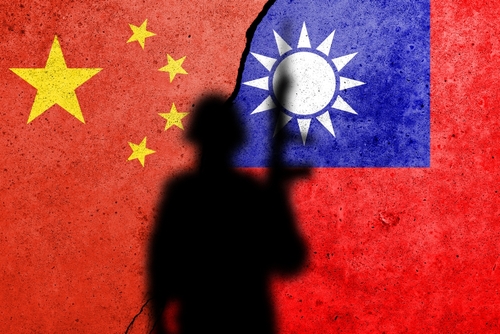
The Center for Strategic and International Studies conducted an extraordinary survey of 64 leading experts on China, Taiwan, and cross-Strait relations, including 28 former senior U.S. government officials, 23 former government policy and intelligence analysts, and 13 academics and think-tank experts. What their answers reveal is not that China is preparing to invade Taiwan tomorrow, as the neocons would like everyone to believe, but that Beijing remains willing to wait so long as nobody crosses the line of formal Taiwanese independence. Some 84% said Beijing is willing to wait for unification but will not accept the status quo permanently, while only 10% believed China seeks unification at the earliest opportunity. Not one of the 64 experts believed Beijing would ever accept an independent Taiwan.
This is precisely why Taiwan has become so dangerous. The West keeps portraying the conflict as if Xi Jinping wakes up every morning staring at a calendar trying to decide when to launch an amphibious invasion. Yet 83% of these experts said China did not plan to use significant kinetic force against Taiwan by 2027, and 80% said China’s enormous 2022 military exercises did not indicate Beijing had accelerated its timetable. Only 6% of respondents outside the former senior government group saw 2027 as a hard deadline, while not one former senior U.S. official did. The obsession with 2027 has nevertheless become extremely useful for the military establishment because every supposed deadline becomes another justification for weapons, deployments, bases, and spending.
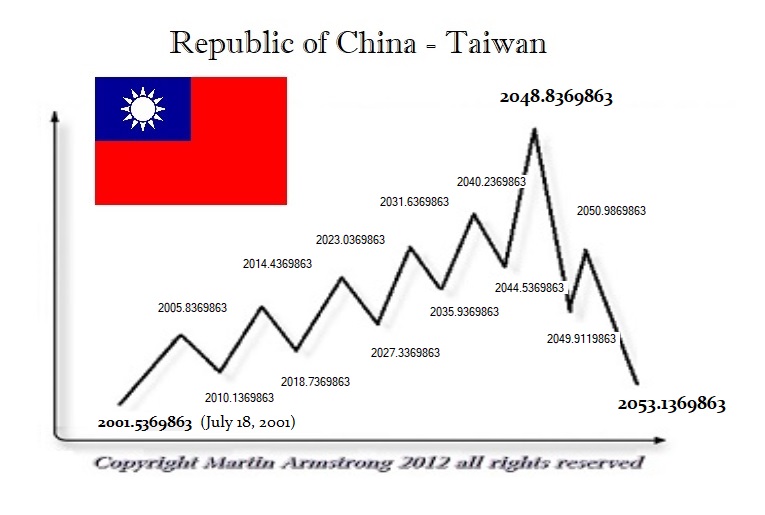
The survey found that 44% believed Beijing has a hard deadline of 2049, the centennial of the People’s Republic, while 42% believed China could wait indefinitely provided unification remains possible. This is an important distinction because China thinks in terms of generations while Western politicians think in terms of the next election. Beijing does not need to invade Taiwan if economic, political, and military pressure can gradually change the situation in its favor. Only 20% of those surveyed believed China even possessed a coherent roadmap for peaceful unification, which tells us this is not some perfectly scripted invasion plan sitting in Xi’s desk drawer.
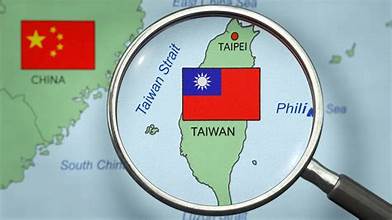
Where the numbers become alarming is not an unprovoked invasion but what happens when politicians begin crossing China’s red lines. More than three-quarters of the experts, 77%, believed China would invade within six months if Taiwan formally declared independence. Among former senior U.S. officials, that number was 79%. Even some of those who did not expect an immediate invasion believed Beijing would respond with a blockade or enormous military exercises. This is why politicians encouraging Taiwan toward formal independence are playing with the lives of 23 million people. They can deliver all the speeches they want about democracy from Washington, London, or Brussels, but they will not be the civilians sitting underneath the missiles if their political experiment goes wrong.
Not one expert believed an explicit American commitment to defend Taiwan would cause China to invade immediately, but 64% believed Beijing would respond strongly enough to provoke a U.S.-China or China-Taiwan crisis, while another 31% expected a more limited negative response. Only two of the 64 experts believed formally committing America to Taiwan’s defense would actually deter China from using force because Beijing already assumes that the United States will intervene anyway.
A direct invasion is not even the most likely path toward conflict. Only 8% of the experts described an amphibious invasion within ten years as likely, while 63% called it possible and 27% unlikely. Force short of invasion received much higher probabilities, with 52% saying deliberate escalation such as a blockade was likely or very likely. An accidental military incident was considered even more dangerous, with 34% saying a collision or accident around the Taiwan Strait was likely and another 22% calling it very likely. When warships and aircraft from opposing nuclear powers continually operate around the same small body of water, war does not require some grand master plan. It requires one mistake followed by politicians who refuse to back down.
A later CSIS survey of American and Taiwanese experts reinforces that point. Roughly 90% of U.S. experts and 62% of Taiwanese experts believed China already possessed the capability to impose a law-enforcement-led quarantine that substantially reduces trade into Taiwan. Around 80% of American experts and 60% of Taiwanese experts believed Beijing could execute a PLA blockade, while Taiwanese experts were considerably more skeptical that China could successfully carry out an invasion. If Beijing wanted to coerce Taiwan during the following five years, experts considered a quarantine the most likely option. If China decided it wanted immediate unification, however, approximately 80% regarded a highly kinetic joint blockade as likely or very likely.
This is where the economic consequences become enormous because Taiwan does not need to be invaded for the world economy to be thrown into chaos. A quarantine or blockade would immediately threaten shipping, insurance, semiconductor supply chains, electronics, automobiles, communications equipment, and virtually every modern industry dependent upon advanced chips. The later CSIS survey found most American and Taiwanese experts did not believe Taiwan could withstand a Chinese blockade for longer than three months without substantial U.S. intervention. Washington would then face the decision nobody wants to discuss honestly: accept China’s blockade or attempt to break it militarily and risk direct war between two nuclear powers.
Taiwan is also the world’s semiconductor pressure point. The island’s importance to advanced chip manufacturing means a serious blockade would not remain a regional event. Factories thousands of miles away could discover that a conflict they thought had nothing to do with them suddenly prevents them from obtaining critical components. Markets would begin repricing the risk immediately, shipping premiums would explode, companies would scramble for inventory, and governments would discover once again how fragile global supply chains have become. This is why capital will react long before politicians formally declare that a war has begun.
What I find particularly revealing in the later CSIS survey is the difference between American confidence and Taiwanese confidence in Washington. An astonishing 96% of American experts were completely or moderately confident that the United States would intervene militarily if China invaded Taiwan during the following five years. Taiwanese experts were less confident in American intervention and considerably less confident that U.S. allies would join the fight. It is always easier for people thousands of miles away to be certain about somebody else’s war.
This is precisely why Taiwan remains one of the critical geopolitical pressure points as we move toward 2029. The danger is not simply that China arbitrarily decides to invade. The greater danger is escalation, miscalculation, political promises that cannot be withdrawn, and Western policymakers convincing themselves that every additional provocation somehow produces deterrence. China has made its position on formal independence perfectly clear, and even the experts inside the Western foreign-policy establishment overwhelmingly acknowledge that Beijing would react with force if that line were crossed.
If Taiwan declares formal independence, 77% of the experts surveyed believed China would invade within six months. That is not a statistic policymakers should treat as another war-game scenario. It is a warning about what happens when politicians deliberately remove the ambiguity that has helped keep the peace.