

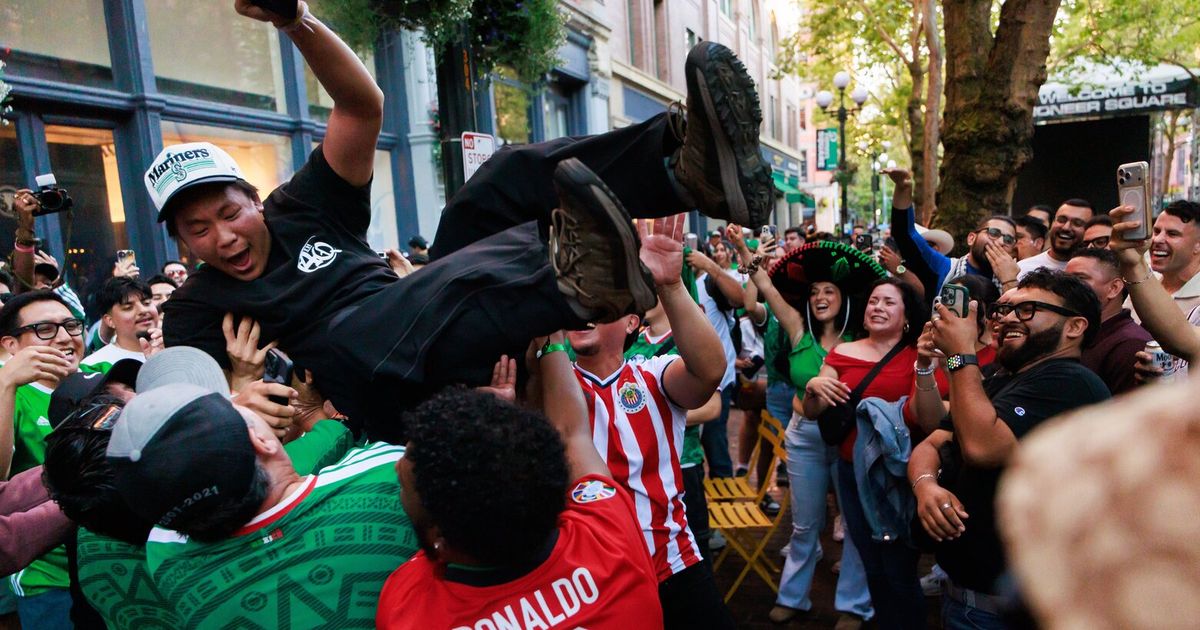
Over the last month, Seattle was something we haven’t been in a while: unguarded, joyful, overflowing. Pioneer Square shut its streets and filled them with drums, flags, strangers hugging strangers, and lines at businesses still struggling through a post-COVID recovery. Our new waterfront buzzed. Seattle Center hummed. Visitors got a version of our city locals may have forgotten was possible.
We should be proud. We should also be clear-eyed: if we don’t capitalize on this moment, World Cup 2026 could become something we reminisce about years from now, in a future where our urban core has collapsed.
Right now, the asset that made it possible — Lumen Field — sits inside a Seahawks franchise about to sell for an eyewatering sum, with new stadium conversations already attached to the winning bid. That’s to say nothing of rumblings about the Sounders decamping for Renton. This should terrify anyone who cares about the health of our city.
Let’s recognize what Lumen Field is: It’s unquestionably America’s premier in-town mega-stadium. A handful of ballparks stake similar claims, but they’re a fraction of the size and don’t carry the aftershocks of a Beast Quake, the roar of 70,000 Sounders fans, or Beyoncé’s Hive dancing late into the evening. Lumen sits blocks from downtown, walkable from the ferry terminal, and on the same street grid, bike lanes and transit lines as our historic haunts. That proximity isn’t a lucky accident — it’s well-planned civic infrastructure, and it’s exactly what brought the Pioneer Square fanfest to life.
Reporting on the Seahawks sale has already floated a new stadium as necessary to justify a winning bid: new revenue streams, a roof that makes Seattle a Super Bowl host, more luxury boxes for corporate buyers. Legitimate arguments from an ownership perspective — and exactly the kind that, in city after city, end with franchises relocating to a sad exurban slab of asphalt. Downtown blocks that depend on the entertainment economy hollow out, neighborhoods die, fans get a worse experience, but the billionaire owners can justify their investment.
Seattle doesn’t have to just hope it doesn’t happen here. The World Cup proved we can make our city harder to walk away from.
Here’s the proposal: Seattle should preemptively designate a defined set of “Fanfest Days” tied to major Lumen events — Seahawks, Sounders and Reign games, major concerts — and turn the Pioneer Square closures, vendor permitting and public-space activation we just showcased into a standing civic program. A plan the city runs on a predictable calendar, the way it plans a marathon or Seafair. Drive more fans to Lumen events regularly, and it becomes bad business to move our teams to a parking lot in, say, Maple Valley (sorry, Maple Valley). Make Seattle integral to the Lumen experience, and fans will return on nonevent days too, to a neighborhood they’ve come to know and love.
The honest objection is cost. But this isn’t the FIFA-scale undertaking we just pulled off — it’s street closures, portable restrooms, added security and some cleanup. A rounding error next to World Cup logistics. And the businesses that benefit most are exactly the ones who’d likely help pay for it. A modest levy district on Pioneer Square and stadium-district property owners — who just watched foot traffic and receipts spike for a month straight — is a proposal they have real incentive to support.
None of this guarantees Lumen stays as it is, or that new ownership won’t push for change. But it changes the calculus. A stadium embedded in a neighborhood with a city-backed tradition of turning game days into downtown events is harder to replace with a building in a far-off parking lot. It gives city leaders, and fans themselves, a real argument to make when that conversation comes. And make no mistake, it is coming.
We must make the World Cup a preview, not a swan song. There’s plenty to improve on — the Chinatown International District needs to genuinely benefit, for one. But we just learned what our historic core can be when big events are citywide occasions, not traffic to route around. The question for Seattle’s leaders isn’t whether we can host the world — we just proved we can, six times over. It’s whether we have the guts and vision to strengthen our hand for what’s coming. The Seahawks new owners inherit a stadium that isn’t just a tenant of downtown, but load-bearing for it. If we don’t seize this moment, we risk the abandonment of a Seattle jewel and the collapse of its first neighborhood.
