

I lay on my back in the cold mud, legs up, kicking at the early morning air. Rain splattered my face, one of many in rows of other new Army JAG officers in training at Fort Lee, Va.
Upright and looking down at all the lawyers shivering on the ground, a warrant officer walked by. “You guys are living the dream,” he told us.
I cursed under my breath. I’d lost my sense of humor somewhere underneath the sweat and rain. I assumed he was enjoying giving all of us a hard time.
But the more I focused on his words, the more it dawned that this moment wasn’t some indignity — it was a nod to a higher purpose.
We were putting in the work because it put us in the best position to succeed when called upon. We were sharpening our edges to be ready as officers, leaders and lawyers with a duty to help protect the country we call home, those who serve, and the freedoms and rights we cherish. The military is one of the great melting pots of our country, bringing together people of all races, economic backgrounds, and political beliefs to defend our democracy.
That’s vital to remember right now in this time of intense polarization. It’s hard for Americans to feel united about anything because they don’t even feel safe talking to each other about what they believe. After the assassination of Charlie Kirk, talk of “civil war” spiked on social media.
This Veterans Day, my memories of the people I served with remind me of how Americans of all stripes can come together for a higher purpose. The people who put their lives on the line are as diverse as our nation itself. What binds them together is a commitment to protecting each other’s freedoms and those of the folks back home.
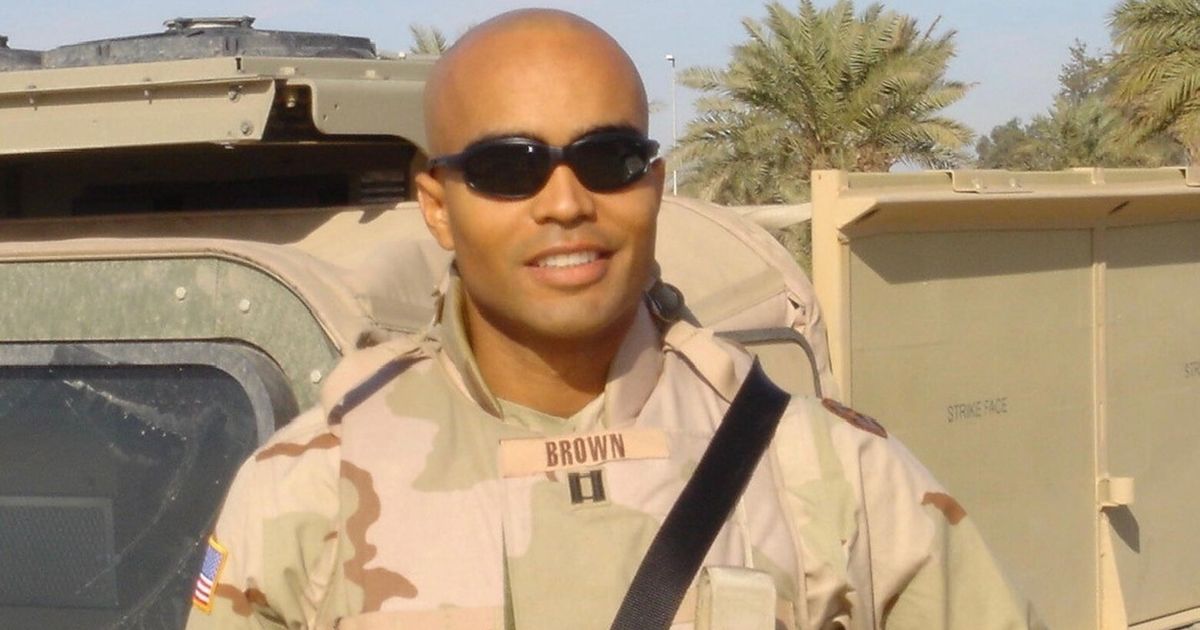
I carried on a family legacy of military service when I joined ROTC to help pay for college and later joined the U.S. Army JAG Corps after law school. In early January 2005, I climbed aboard a C-130 to Baghdad to serve for a year as a criminal defense attorney representing soldiers serving in a war zone.
In Iraq, I experienced the powerful bonds formed between Americans who may never have otherwise crossed paths. We quickly learned to trust each other with our lives. I was frequently traveling across Baghdad and in outlying areas of Iraq to meet clients, sometimes by Blackhawk helicopter, often in armored vehicles in the streets. Occasionally, we’d be shot at from the ground. In those moments, none of the traditional divisions in American society — race, class, geography, political beliefs — mattered at all. Strangers to each other at home, it was our desire to serve and duty to protect each other that brought us together halfway around the world.
I never stopped thinking about those I served with after my return to the U.S. — the teenagers in uniform braving the possibility of improvised explosive devices as they drove Humvees through the streets of Baghdad; the military judge presiding over a jury trial while bombs went off outside; the father from Louisiana serving in the National Guard, deployed more than 7,000 miles away from his five children. War is the ugliest thing humans are capable of, but even in that space, it’s still possible for people to see greatness in each other.
And perhaps that can give us hope for this moment, when no one can agree on anything except the fact that something is wrong.
Too many Americans are strangers to one another. We let pundits and influencers fill those blind spots for us by encouraging and validating our assumptions, to the detriment of open-minded conversations. But we don’t live this moment separately — we’re all going through it.
There is a violent tension in our country right now. There are forces that want to drive a wedge as wide as possible. People who have never even seen a war zone go on TV and social media every day declaring “war” on their opponents, calling parts of America they’ve never visited “war-torn,” and referring to protesters as “terrorists.”
This distorted reality at home is driving us apart. But if we can understand that this moment is taking a toll on all of us as individuals — that we are all in this together — maybe we can find enough grace in ourselves to have tough conversations without going to war with one another.
Veterans are key to fostering that dialogue, not just because we served but because we did it as part of a diverse cross-section of America engaged in a higher purpose. That memory reminds me why our constitutional democracy is so precious and worth defending.
