

Tens of thousands of people in northwest Indiana have been living without electricity for more than a week, yet this disaster received little national attention until residents had already entered what they described as “survival mode.” The blackout began after an August 11 derecho produced winds approaching 99 miles per hour, destroying power lines, transmission equipment, and utility poles across the region. More than 300,000 NIPSCO customers initially lost service, representing over 60% of the utility’s system and the largest outage event in its history. As of August 20, approximately 68,000 customers reportedly remained without power, with parts of Gary warned that full restoration could take until August 25.
This is not merely an inconvenience caused by a summer storm. Schools have closed, businesses have lost inventory and revenue, families have thrown away spoiled food, and people who depend upon refrigerated medicine or electrically powered medical equipment have been placed at risk. Traffic signals stopped working, communications were interrupted, and residents were forced to line up at community centers for hot meals and a place to charge their phones.
The national media will discuss an outage when it affects an airport, Wall Street, or a wealthy neighborhood. When working-class communities in Gary and Lake County lose power for more than a week, the story remains largely local until the suffering becomes impossible to ignore. There has been reporting, but the scale of the national response bears no relationship to the severity of what happened. If 68,000 customers in Manhattan had remained without electricity for nine days, every network would be broadcasting live from the streets and Congress would already be demanding hearings.
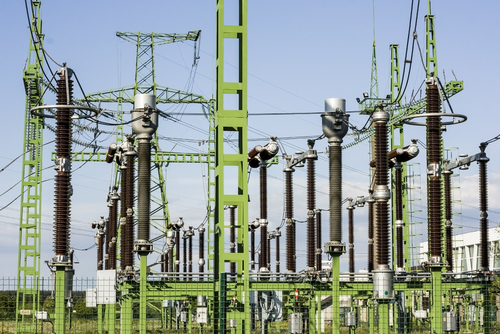
NIPSCO says the damage was unprecedented and that crews must replace or repair approximately 300 distribution poles and 44 transmission poles in Gary alone. More than 600 line workers have reportedly been involved in restoration efforts. Nobody should diminish the severity of a derecho with hurricane-force winds, nor blame crews working in dangerous conditions. The problem is that a natural disaster has exposed how little redundancy exists in the system. When a single series of storms can knock out electricity to most of a utility’s customers and leave tens of thousands disconnected for more than a week, the grid has become a single point of failure for the entire community.
America has built an economy in which virtually nothing functions without electricity. Food cannot be preserved, fuel pumps cannot operate, electronic payments fail, mobile phones eventually die, and many modern appliances become useless. Hospitals and emergency facilities possess backup generators, but ordinary households and small businesses are expected to fend for themselves. The government promotes the electrification of vehicles, heating, cooking, and transportation while the grid required to support this dependence remains vulnerable to trees, flooding, aging poles, overloaded transformers, and severe weather.
The American Society of Civil Engineers has repeatedly identified the country’s energy infrastructure as requiring massive investment. Much of the national transmission and distribution network was constructed decades ago for a completely different economy. Demand is now increasing from data centers, electric vehicles, manufacturing, air conditioning, and the attempt to electrify still more activities. The government cannot simultaneously increase dependence upon electricity and ignore the physical system that distributes it. That is not an energy transition; it is building society around a vulnerability.
Wealthier households can purchase whole-home generators, battery systems, hotel rooms, and replacement food. A low-income family may lose hundreds of dollars in groceries and have no money to replace them. An hourly worker may lose wages because a workplace or school is closed. Parents must choose between remaining home with children and reporting to work. Insurance deductibles can exceed the value of the property destroyed, while public assistance often arrives after the immediate crisis has passed.
Governor Mike Braun declared a statewide disaster emergency, deployed the Indiana National Guard, and requested federal assistance after the storms caused deaths, flooding, displacement, and widespread infrastructure damage. Those measures are necessary, but emergency declarations address the aftermath rather than the underlying vulnerability. The political system operates from crisis to crisis because preventive investment requires planning beyond the next election. Money is found instantly after disaster strikes, but routine maintenance is treated as an expense to be postponed.
This blackout should also raise serious questions about accountability. Regulators must determine whether maintenance, vegetation management, emergency staffing, spare-equipment inventories, and system redundancy were adequate before the storm. That inquiry should not become an attempt to scapegoat line workers or pretend that no storm should ever cause an outage. The relevant question is why restoration for an urban area can require nearly two weeks and whether the system was prepared for an event that severe-weather models have long treated as possible.
Ancient cities protected their wells because water represented survival. Industrial society must treat electricity with the same seriousness. A power grid is not merely another corporate service. It is the infrastructure supporting food, health, banking, transportation, communications, public safety, and employment. When it fails for days, civilization quickly contracts to generators, canned food, cash, and neighbors helping one another.
Indiana was struck by an extreme storm, but the prolonged blackout is a warning to every American city. The country is increasing electricity demand while its transmission and distribution systems remain fragile, centralized, and expensive to repair. Politicians speak endlessly about creating the grid of the future while residents in Gary are waiting for the grid of the present to turn their lights back on. The storm caused the blackout, but years of neglect determined how difficult it would be to recover.
