

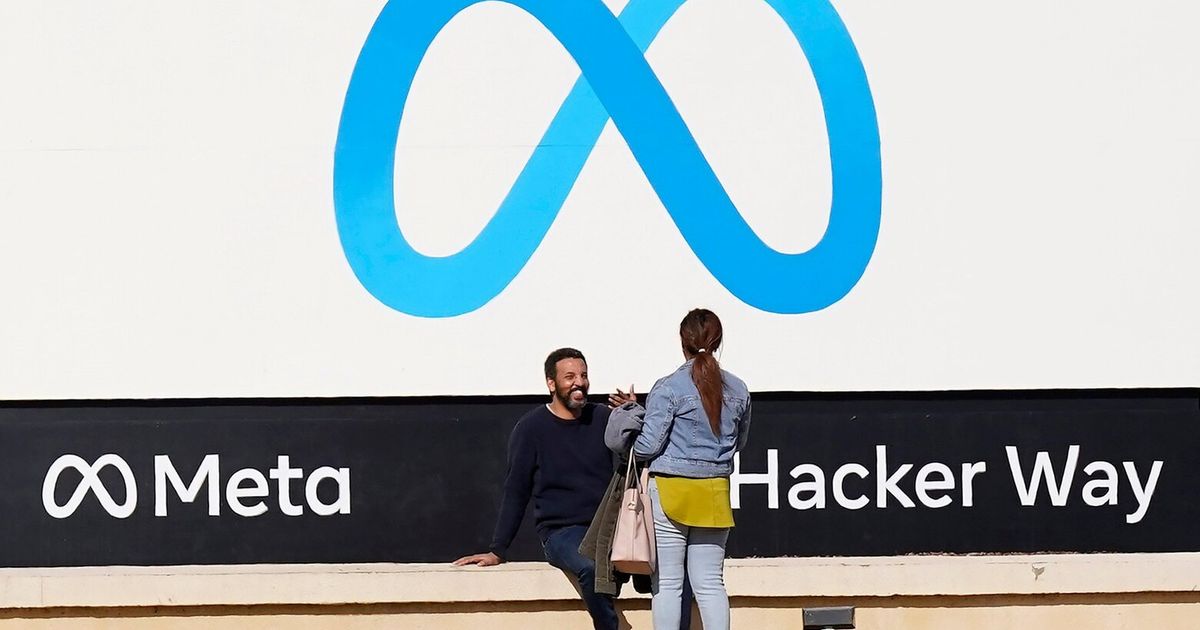
Perhaps it’s time to start calling Meta an antisocial media company.
Fresh off its $17 billion payout to settle claims that it harmed teens, Facebook’s parent company is gearing up to ask the U.S. Supreme Court to override Washington state’s political spending disclosure law.
The company has fought Washington’s disclosure rules for years, prompting a series of court fights that it repeatedly lost. That should have ended in June when the state Supreme Court upheld a $35 million penalty for Meta’s repeated and willful violations of the law.
Instead, Meta recently asked the nation’s highest court for more time to appeal the June decision. If it appeals and wins, the case would undermine Washington’s law requiring disclosure of campaigns’ spending to influence voters.
The first two definitions Merriam-Webster provides for “antisocial” are “averse to the society of others” and “hostile or harmful to organized society.”
Washington is a society that traditionally prioritizes public disclosure so residents can know what their government is doing and who is spending what to advance political campaigns.
That includes a law created in 1972 requiring disclosure of what campaigns spend on advertising. Media companies must keep records of such ad sales and disclose them when asked by the public.
Far smaller and poorer media companies handled this obligation for decades without complaint.
Meta chose to blatantly flout the law, effectively picking a fight with the state. It was sued in 2018 and decided to just stop selling political ads in Washington. Then it continued to do so, and declined to disclose records when requested, prompting the state to sue again in 2020.
Poor execution aside, Meta made a business decision to give up some revenue instead of comply. It’s similar to the choice it made in Canada, to block news from its sites rather than pay what it owes news publishers.
Meta argued in Washington courts and its filing with the U.S. Supreme Court that the state’s disclosure law is unduly burdensome and infringes on its free speech rights.
Federal judges should also laugh the $1.6 trillion company out of court for arguing that it can’t afford to keep and share records of a tiny share of ads it sold in Washington.
The principal at stake is not free speech but whether Meta should follow rules that other companies selling ads must follow. Their compliance shows the law is not unduly burdensome or a First Amendment violation.
Minor paperwork obligations do not outweigh the public benefit of transparency. Otherwise campaign and lobbyist disclosure rules could also be tossed because it’s burdensome to file the reports.
Meta is right, though, that few have asked to view the campaign ad records. That’s on the press and the public, which should pay more attention. Even so, these records are like reference books in a library: They’re an expense to maintain but you don’t toss them or block access because they aren’t read frequently.
The company may be unable to afford a log of political ad sales but it has money to burn on lawyers.
In an Aug. 31 filing it asked the U.S. Supreme Court for more time to file its appeal of the June ruling in Washington. Justice Elena Kagan granted the request on Sept. 3, giving the company until Nov. 15 to file. I learned of the filing from online trade publication MediaPost.
As I wrote in June, Meta’s complaints about having to disclose political ad sales ring hollow.
Even rickety old newspapers can keep track of such things and follow the disclosure rules.
But it’s just too much for a company making billions selling hypertargeted ads using some of the world’s most powerful computing systems.
If that’s true, the ones who should be suing are shareholders being duped about Meta’s capabilities.
Another Sun rises: The Washington Post’s new local competitor, The Washington Sun, launched today with a 110-person newsroom and “more sports reporters than any other D.C.-area publication,” former Post reporter Dana Milbank writes at The Sun. The publication is backed by Politico co-founder Robert Allbritton. It began as a political news site, NOTUS, and was going to rebrand as The Washington Star but that name was already claimed.
The Post shouldered into the same news cycle by revealing that owner Jeff Bezos hired its acting publisher and CEO, Jeff D’Onofrio, to the job on a permanent basis. A spokesperson told trade publication Press Gazette that it’s “on its closest path to profitability in five years” after selling more than 300,000 subscriptions so far this year.
NYT copyright case: Motions for summary judgment were filed Friday in The New York Times copyright case against OpenAI and Microsoft, as noted by Jason Kint, CEO of trade group Digital Content Next. The outcome is pivotal for a news industry whose copyrighted work is being slurped up and regurgitated by AI companies. It also prompted nearly 400 other newspapers to file similar cases, including The Seattle Times.
Kint opines that the case is “not about stopping AI” but “whether AI will be built on fair markets and sustainable incentives for original work.”
This is excerpted from the free, weekly Voices for the Free Press newsletter. Sign up to receive it at the Save the Free Press website, st.news/SavetheFreePress.
