

A friend recently sent me a link to a 2007 Seattle Times column castigating my mayoral administration’s lofty vision of a Seattle waterfront without an elevated highway walling it off from our city.
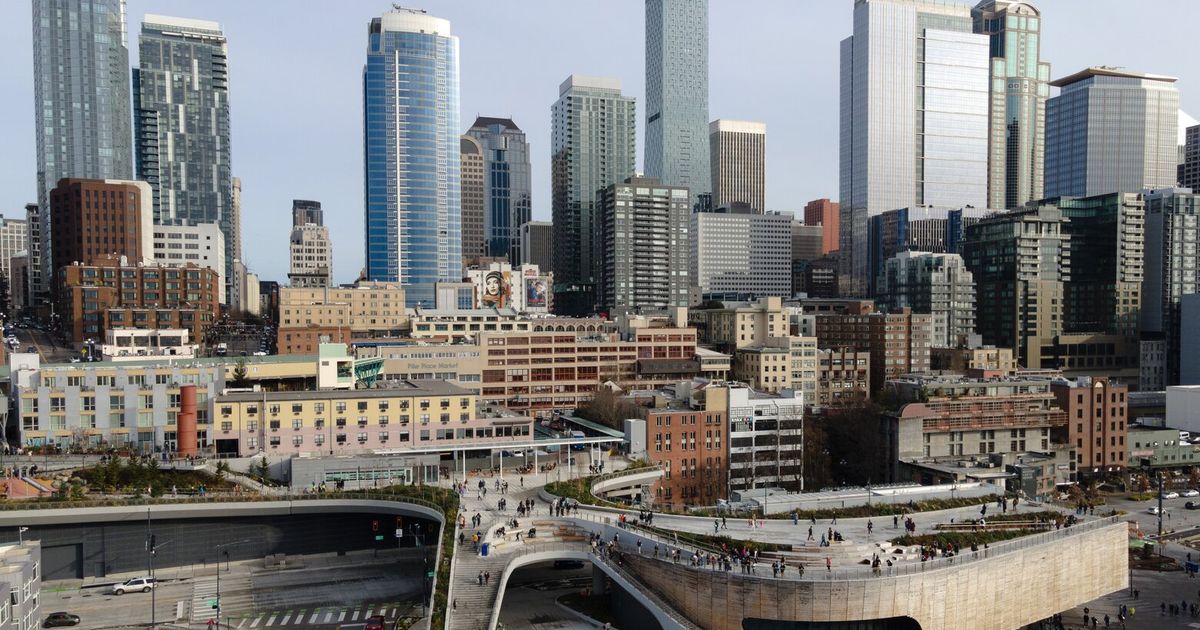
Today, the Alaskan Way Viaduct no longer casts its imposing shadow. And smart investment and design have only further developed the waterfront into a lively gathering space celebrating arts and culture.
I forwarded the link to the author, Kate Riley, who is now The Times editorial page editor. I needled her a bit with a “smiley face” emoji (yes, I agree, tacky). In response, Kate conceded the failure of her predictions and invited me to pen an “I told you so” piece for The Times Opinion pages.
The Alaskan Way Viaduct was opened in three segments: the main section in 1953, the Battery Street Tunnel in 1954 and the southern connection to East Marginal Way in 1959. When the first section was completed, The Seattle Times gushed: “V-Day was Viaduct Day and Victory Day; a triumph in double measure!” At some point, the euphoria subsided and was replaced by skepticism over the impact of such a massive structure on the waterfront.
As time went by, oceangoing freight became more containerized and moved primarily south, and the central waterfront was changed from industrial use to a civic asset.
As early as 1963, city planners began talking of the central waterfront as the city’s “front door.” Subsequently, voters approved the 1968 Forward Thrust bond issue, which provided funding for a Waterfront Park between Piers 57 and 59, opened in 1974, and the Pier 59 Seattle Aquarium, in 1977.
All this assumed the continued presence of the hulking viaduct — that is, until just before 11 a.m., Wednesday, Feb. 28, 2001.
The Nisqually earthquake damaged the viaduct enough to call into question its safety and long-term viability. When I was elected mayor later that year, I committed to removing the dangerous structure, transforming the waterfront and reconnecting the city and Elliott Bay. We would reopen our “front door.”
The campaign to keep my promise took nearly eight years to win and another 15 years to achieve the reconnection and waterfront transformation.
In 2004 I participated with mayors from six other cities in the Mayor’s Institute on City Design in Charleston, S.C. Each mayor brought a project case study. After we presented, prominent design professionals would offer their perspectives. I took the opportunity to explore the removal of the viaduct as my case study. The experts’ guidance helped me communicate my vision to state and local elected officials and the public.
State leaders initially threatened to replace the viaduct with another double-deck highway. As mayor, and with unanimous City Council support, I responded, in effect, “over our dead bodies” and, maybe not in so many words, state leaders indicated they would consider that.
Eventually the evolution of deep-bore tunnel technology allowed the governor, legislative leaders and me to modify our positions. We came to an agreement and could move forward, replacing the viaduct with a tunnel and reclaiming our waterfront.
I appointed, with the concurrence of the City Council, a Citizens’ Central Waterfront Committee headed by former Seattle Mayor Charley Royer and citizen-activist Maggie Walker. The committee provided continuity through the next several mayoral administrations and provided an important connection between the multiple generations of actors in this civic soap opera.
The waterfront that is emerging is the result of 20 years of effort to transform it from a noisy, dirty, compromised space dominated by the 1950s era double-decked Alaskan Way Viaduct to a people place to be enjoyed daily by Seattleites and our guests.
There are beautiful new Washington State Ferry and water taxi terminals, an actual beach and a significant addition to the Seattle Aquarium. Best of all, connections between downtown and the waterfront are at nearly every cross-street, including the spectacular Overlook Walk connecting Pike Place Market to the waterfront.
Seattle’s vibrant retail core may not return to the days when Frederick & Nelson, the Bon Marché and Nordstrom’s offered unmatched shopping experiences. But with 100,000 people now living downtown, the connection between the Convention Center, Pike Place Market and our gorgeous, transformed waterfront will provide the energy necessary for a rebirth of a compelling and dynamic center city.
The biggest complaint I heard during the yearslong viaduct replacement debate was the loss of the view from the northbound viaduct lanes. Visit the Overlook Walk and you will find that view is alive and well; to be enjoyed by you, your kids and your out-of-town cousins!
There are pieces still to be completed (such as the replacement Waterfront Park between Piers 57 and 59), but the transformation is largely complete. After your next visit, you can be the judge! I am proud of the role I played igniting this transformation. It’s been a long road, but thanks to the perseverance of so many elected leaders and citizen-activists, we’re here.
It is tempting in these turbulent days to believe that things cannot change, that we can no longer accomplish big things. I believe the story of Seattle’s waterfront transformation says, “Yes we can!”
