

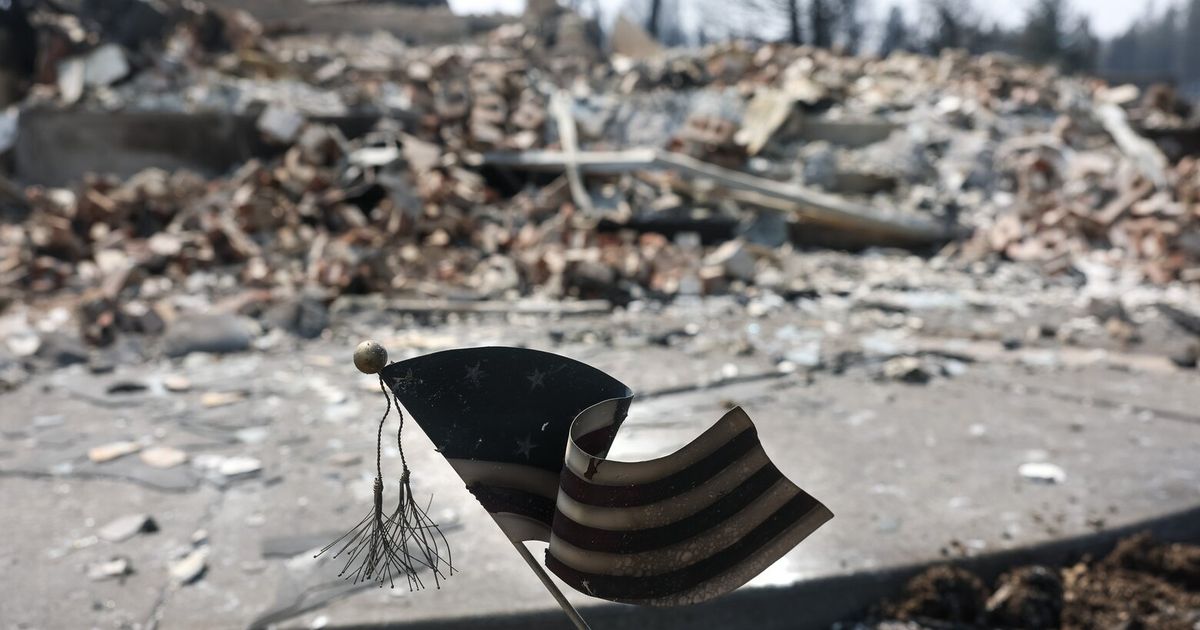
On a quiet morning in August, I stood in the middle of an intersection in a neighborhood that no longer existed.
All around me, homes in this small suburban enclave in Northwest Spokane had been reduced to ashes, trees were black and bare, and nothing was left but scattered reminders of all that had once been there: a melted basketball hoop, a staircase leading to nowhere, a patio grill with the patio burned to the ground beneath it.
As I stood quietly, a car drove slowly up the road and stopped in front of one of the lots. A man and woman emerged from the car, stepped onto the sidewalk, and looked at the blank space where their house had stood just a few days before. The woman began to weep.
For them — and for thousands of Washingtonians — life was now divided into “before the fire” and “after the fire.”
Washington just experienced one of the most devastating wildfire seasons in our state’s history. So far this year, nearly 900,000 acres have burned, and destructive fires like the Spokane Complex and the Kaiser Canyon Fire on the Colville Reservation have led to the destruction of hundreds of homes and forced tens of thousands to evacuate.
Over the summer, I traveled across the state and saw firsthand the devastation these fires have caused. Walking those fire lines and burned neighborhoods reinforced something I already knew: This year is a warning for us all, and an urgent call to action.
Climate change is supercharging a drought that is drying out our lands and forests, creating conditions that allow fires to grow larger, move faster and burn more intensely. Never — before this summer — have we had to evacuate tens of thousands of people. Never — before this summer — have we seen entire suburban neighborhoods completely leveled.
This new reality demands that we adapt, not only by reducing the risk of catastrophic wildfire, but by helping communities become more resilient when fires do occur. This new reality means we must accelerate our work in wildfire prevention, resilience and response.
Five years ago, Washington lawmakers came together and made a historic, half-billion-dollar investment in wildfire prevention, community resilience, and, crucially, forest health.
That funding meant we were able to bring in more than 8,500 firefighters to respond when these fires reached into neighborhoods we could never have imagined were threatened by wildfire.
That funding meant we were able to build the fuel break that protected a Colville Nation senior center in Nespelem from the Kaiser Canyon Fire. It meant forest health treatments that slowed last summer’s Burdoin Fire near White Salmon long enough for firefighters to contain it. And it meant millions of dollars for wildfire-prone communities, dozens more firefighters and personnel, and hundreds of forest health projects across the state.
These projects work. They protect communities. And they can often mean the difference between a fire ending quickly, or tragically.
As devastating as these fires have been, I shudder to think what may happen in the future if we fail to build upon these investments and commit to them in the long run.
Because, sooner than many people think, the devastation we witnessed in Spokane could happen west of the Cascades in communities near Tacoma, Olympia or even Seattle.
Western Washington’s wetter climate doesn’t make it immune. During periods of extreme drought and strong winds, a single spark can threaten densely populated communities where evacuation routes are limited and residents may be unprepared. The risk is different west of the mountains — but it is real, and the consequences could be enormous.
As wildfires grow in both size and severity, so must our response.
We know that the investments we have made since 2021 have paid off. With that funding set to expire in just a few years, now is the time to work together to find long-term solutions. The Legislature should act now to make Washington’s wildfire, forest-health and community-resilience funding permanent — and fund them at a level commensurate with the growing threat.
With Labor Day behind us and cooler temperatures ahead, we cannot forget the urgency of this moment. We cannot be concerned only when fires burn, and our skies fill with smoke. We must make a year-round commitment to protect our state from this growing threat.
In recent weeks, I have seen acres burned, homes destroyed and people displaced. But I have also seen something else.
I’ve seen firefighters from across the country fighting alongside Washington crews. I have seen neighbors helping neighbors. I have seen tribal, local, state and federal agencies working together with a common purpose.
At a time when our country so often feels impossibly divided, these moments remind me of something important: Wildfires don’t care whether we are Republicans or Democrats, urban or rural, east side or west side. Neither should we — or our commitment to protect and support one another.
That spirit of shared responsibility gives me hope. It is also what will carry us forward as we confront one of the defining challenges facing our state.
