

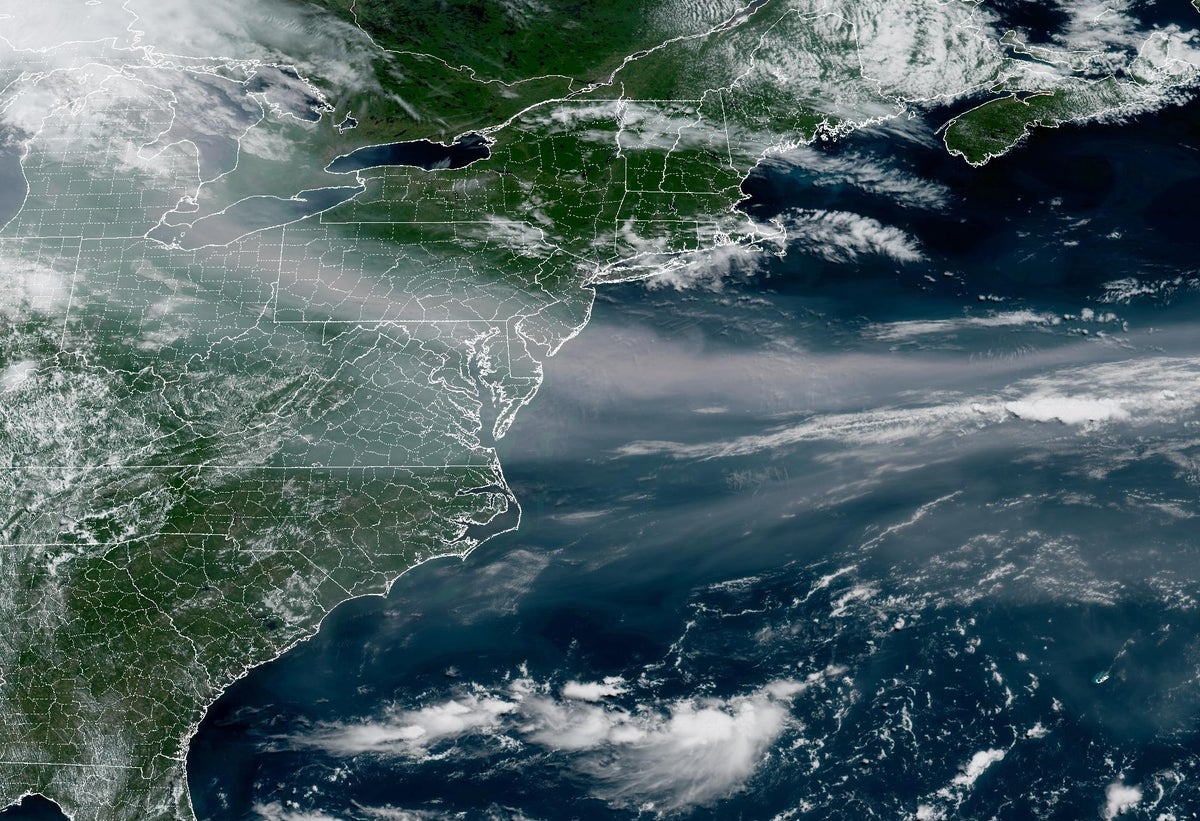
Much of the U.S. is shrouded in smoke. Wildfires burning across Canada have sent plumes of air pollution to the Midwest and the Atlantic Coast. As of the time of writing, Chicago, Detroit and Washington, D.C., topped a ranking of the worst air quality in the world.
The smoke has serious health consequences. Even distant wildfire smoke can be dangerous to human health—and possibly much more so than other forms of air pollution.
In one 2021 study, researchers analyzed respiratory hospitalizations in southern California and determined that residents’ exposure to particulates in wildfire smoke appeared to be 10 times more dangerous than exposure to other forms of particulate matter of the same size, smaller than 2.5 microns—that’s small enough to enter the bloodstream. It’s unclear if the smoke is so much more dangerous because of its unique chemical composition, the way that it burns or another reason, the authors wrote.
On supporting science journalism
If you’re enjoying this article, consider supporting our award-winning journalism by subscribing. By purchasing a subscription you are helping to ensure the future of impactful stories about the discoveries and ideas shaping our world today.
And in a February study, researchers estimated that, between 2006 and 2020, wildfire smoke caused more than 24,000 deaths per year in the U.S. The authors wrote that there was “no evidence of a ‘safe’ threshold” of exposure to wildfire smoke—any exposure corresponded with an increase in all-cause mortality.
As wildfire smoke travels across vast distances, it can react with sunlight and urban air pollutants to produce ozone, a primary ingredient of smog. In a June study published in Science, researchers estimated that the number of deaths resulting from ozone produced by wildfires has increased by more than 300, on average, each year since 2013.
Some evidence suggests wildfire smoke, like air pollution in general, puts a strain on mental health. As Scientific American reported in 2023, wildfire smoke, smog and other toxic air have been linked to lower test scores in schoolchildren and higher rates of stress and depression. But these kind of studies are rare, and it’s unclear what exact effect wildfire smoke has on the brain.
What is clear, however, is that climate change has made wildfires both more frequent and more deadly. Droughts and heat waves have become more common and more severe, leading to a greater amount of dry vegetation at risk of burning.
As dangerous as wildfire smoke is, there are several ways you can stay safe. The U.S. Environmental Protection Agency recommends people remain inside in accordance with local advisories, keep windows and doors closed and consider using an air filter indoors if possible.
People who have underlying conditions such as asthma and heart disease or who are pregnant, as well as children, are at an increased risk and should be extra cautious, according to the U.S. Centers for Disease Control and Prevention.
If you do go outside, the CDC recommends wearing an N95 mask or P100 respirator for the best protection. Avoid exercising outdoors—it remains to be seen what that means for this weekend’s World Cup final.
Experts also recommend checking your area’s Air Quality Index (AQI) to understand what the air conditions are like near you. Here’s a helpful guide on how to read the AQI.
It’s Time to Stand Up for Science
If you enjoyed this article, I’d like to ask for your support. Scientific American has served as an advocate for science and industry for 180 years, and right now may be the most critical moment in that two-century history.
I’ve been a Scientific American subscriber since I was 12 years old, and it helped shape the way I look at the world. SciAm always educates and delights me, and inspires a sense of awe for our vast, beautiful universe. I hope it does that for you, too.
If you subscribe to Scientific American, you help ensure that our coverage is centered on meaningful research and discovery; that we have the resources to report on the decisions that threaten labs across the U.S.; and that we support both budding and working scientists at a time when the value of science itself too often goes unrecognized.
In return, you get essential news, captivating podcasts, brilliant infographics, can’t-miss newsletters, must-watch videos, challenging games, and the science world’s best writing and reporting. You can even gift someone a subscription.
There has never been a more important time for us to stand up and show why science matters. I hope you’ll support us in that mission.
