

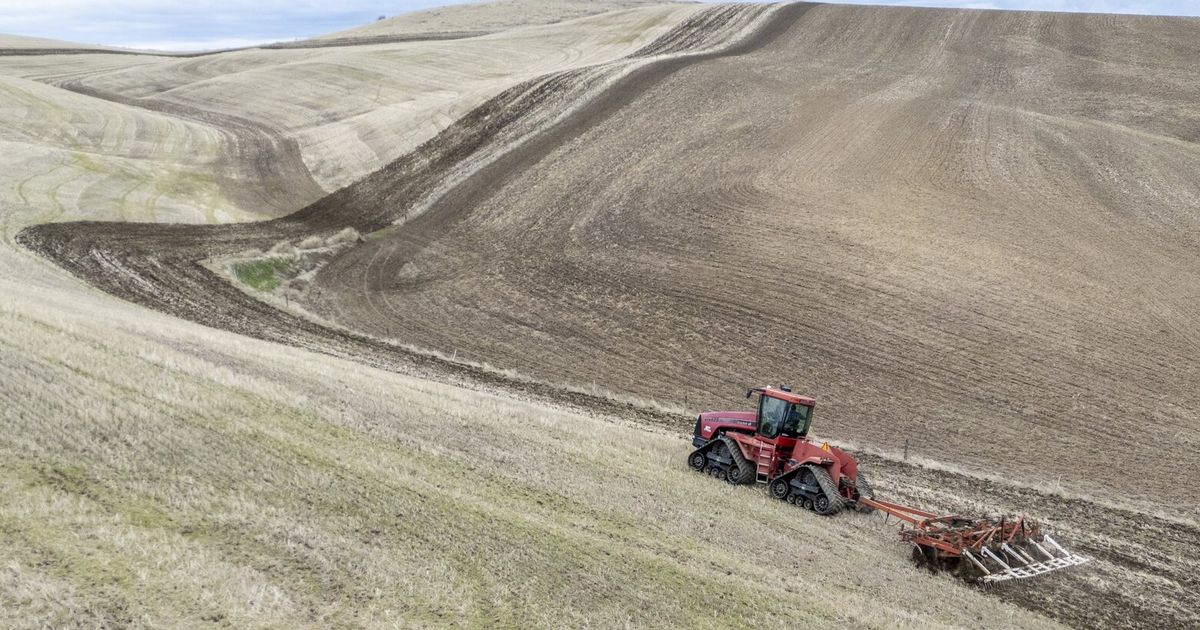
As a longtime farmer, I fear more farmers in our state will be forced to leave this traditional and important way of life behind.
Washington has seen a steady decrease in the number of farms. As a recent Seattle Times story noted (“3,700 WA farms shut down in 5 years. Why?,”) nearly 4,000 farms disappeared in our state from 2017 to 2022, according to the Census of Agriculture.
The Washington Farm Bureau reports there are now just over 32,000 farms in our state, with 94% of Washington farms operated by families who are part of their communities’ fabric yet often struggle to make ends meet.
The dramatic loss of farms is heartbreaking and startling. It should concern everyone, as our farmers provide food not only for Washingtonians but for people around the globe.
Washington’s agricultural industry has been a national and international force for many years. The continued loss of farms could weaken that.
As The Times article noted, farmers face many challenges. Bad weather, such as drought, can ruin crops. We are at the mercy of markets, as the price of crops grown in other parts of the world can either help or hurt farmers here. And yes, the challenges also include a strenuous lifestyle and typically a lack of benefits such as health insurance, paid leave and retirement plans.
Also, farmers are forced to contend with several factors that increase their cost of doing business, including rising prices for fuel, fertilizer, seed and chemicals. Because farmers are “price takers,” not “price makers,” we don’t have the luxury of passing higher production costs along to consumers but must swallow them instead.
One major culprit in disappearing farms: state government, which is complicit in making it harder to survive in our sector of the economy.
Taxes, fees and regulations are a huge reason for rising farming costs. For instance, Washington is one of only two states (Hawaii is the other) that charges sales tax on farm machinery. That tax can be extremely expensive if you must spend tens or even hundreds of thousands of dollars on a wheat combine or tractor.
Unfortunately, Washington ranks at or near the top in several categories that hurt not only farmers but many other businesses, according to the Association of Washington Businesses. Our state’s unemployment insurance and workers’ compensation programs are the most expensive in America, and we have one of the country’s costliest paid family and medical leave programs.
The Climate Commitment Act passed by the Democrat-led Legislature in 2021 created a cap-and-trade program that has hit agriculture especially hard. The CCA has increased many of a farm’s cost inputs, by inflating the prices of gas and diesel fuel in Washington, for example.
It’s frustrating that the CCA was supposed to exempt farmers from paying these higher costs, but the Department of Ecology never implemented the exemption in the law. New legislation was passed this year to make it easier for farmers to take advantage of the exemption by establishing a public directory to find sellers who offer exempt fuel. But this law will expire in 2030, so any relief for farmers will be short-lived.
The Times story also pointed out that labor expenses in 2023 also were 462% higher in Washington than the national average, according to American Farm Bureau Federation data. Those higher costs are due to laws imposed by the Legislature or state agencies. In addition, recent changes in the state’s agriculture-overtime laws have created problems not just for farmers but even for farmworkers.
In addition, Washington farmers are forced to navigate tens of thousands of health and safety laws and regulations, according to the Farm Bureau. Farmers often must spend more time dealing with these regulations than they do working in the field.
The state really can’t do anything about the weather or global markets, but there is much it can do about the taxes, laws and regulations that have already led thousands to give up farming in Washington. Common sense needs to prevail before it’s too late and we lose even more farms.
