

Artificial intelligence promises benefits, but its pernicious impacts must be anticipated and mitigated, else vast inequities and disruptions will result. State and local governments must act soon to mitigate these effects, especially in regulating the massive data centers that have blossomed in the Pacific Northwest and across the country to enable AI.
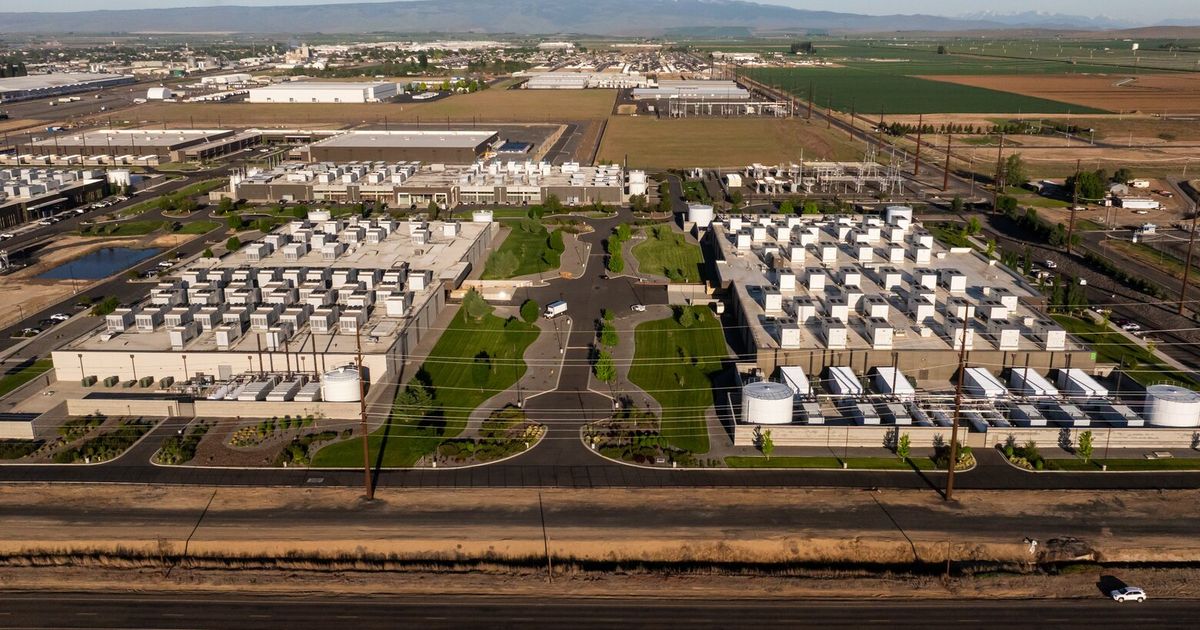
As underscored by a series of 2024 Seattle Times and ProPublica articles, one of the most harmful impacts is the voracious electrical consumption of the largest data centers, dubbed “hyperscalers.” These data centers are huge — the data center campus in Quincy, Grant County, sprawls over nearly 70 acres — and draw hundreds of megawatts of power.
Agricultural, commercial and residential customers of Grant County’s public utility have had to bear the onerous costs of out-of-state power sources in times of high demand due to existing utility commitments to these centers. And unless Olympia takes actions to prevent it, similar power demands from more of these gargantuan facilities will affect regular Washington electricity customers by raising their rates.
In addition to their ravenous appetites for electrons, these massive data centers also require Niagaras of water to cool the microchips and servers that can crunch gazillions of data bits to build AI tokens, models and agents. In The Dalles, Ore., for example, a gaggle of Google data centers consumes over 400 million gallons of water annually — about a third of the city’s entire water supply. In a drought year, as predicted to occur more often in the future, such a huge demand can starve other thirsty users. And when the center returns this warmed water to adjacent rivers, it threatens to elevate their already elevated temperatures, injuring or killing migrating salmon.
Citizens across the political spectrum are rising in fervid opposition to large data centers sprouting in their midst. This is especially true in the rural areas most impacted by the hyperscalers, which are too resource-intensive to go anywhere else. Both Republican and Democratic voters, young and old, are ripe for revolution against Big Tech. On college campuses, the revolt has already begun.
And what has Olympia been doing about this looming challenge? Next to nothing. In fact, our lawmakers have long been granting data center builders and operators lucrative tax breaks to encourage them to build these facilities in our state. And some local officials, who have been figuratively salivating over the prospects of the high-tech jobs and property taxes that accompany the data centers, have been chiming in with tax breaks, too. The unfortunate losers are the electrical ratepayers statewide and local water customers, who will effectively be paying an “AI tax” in their monthly utility bills to help subsidize all this data-center construction.
At least in Seattle, Mayor Katie Wilson has announced a one-year moratorium on new large data centers in the city, and two companies that had previously expressed interest in building data centers in the area withdrew after massive public outcry.
In many ways, we greatly benefit from the data centers in our midst — which enable email, Zoom meetings, online banking and shopping, video streaming, plus the myriad digital benefits of modern life. But like electricity, the essential resources on which these activities rely cannot be left to the machinations of the marketplace, nor to their ultrawealthy purveyors. Digital railroads and stations must be regulated.
We must call upon our elected representatives in Olympia to awaken and reassess the proper relationship between these essential digital resources and their users. The best place to begin is with the explosive electricity and water consumption of the largest data centers now sprouting in Central Washington. These centers should at least be required by law to produce power that is renewable — or to mitigate the air and water pollution that will inevitably result if they cannot.
