

The internet’s next existential crisis won’t be disinformation or deepfakes. It will be copper.
The world is building AI like it’s Minecraft, stacking data centers, transmission lines, and cooling systems with little regard for the physical limits beneath them. Everyone is focused on models and computation, but few acknowledge the metal that makes them run.
Every piece of modern electrical infrastructure—not just AI—depends on copper. AI data centers are simply accelerating demand. One hyperscale facility can require tens of thousands of tonnes of copper. For example, one Microsoft data center used over 2,000 tonnes, or 27 tonnes per megawatt. A McKinsey report predicts that overall transmission build-out could push annual global copper demand up to about 37 million tonnes by 2031.
Accessible copper is running out. More than 70 percent of global reserves are locked in ores that conventional mining struggles to process efficiently. Tens of billions of tons sit idle in waste piles and marginal deposits, overlooked by industry but still rich with potential.
That potential is what drew me here. As a geoscientist who later worked in energy and cloud infrastructure, I saw firsthand the growing need for copper—and realized I had the knowledge to help address it. In 2023, I founded a startup called Endolith to recover copper from these forgotten sources. The tool is not drills or dynamite. It’s microbes.
How microbial mining works
These microbes are naturally evolved, field-deployable, and highly effective at recovering copper from complex ores such as chalcopyrite and enargite. They thrive in leaching heaps under real-world conditions, working with real customers. And the bonus: They use less energy, deliver more copper, and have a smaller environmental footprint than traditional methods.
And what are those traditional methods? Typically, mines extract copper from ores by grinding the rock, concentrating the ore, and then using high-temperature smelting or chemical leaching with strong acids. Both approaches are energy-intensive, slow to unlock copper, and leave behind large volumes of waste and emissions.
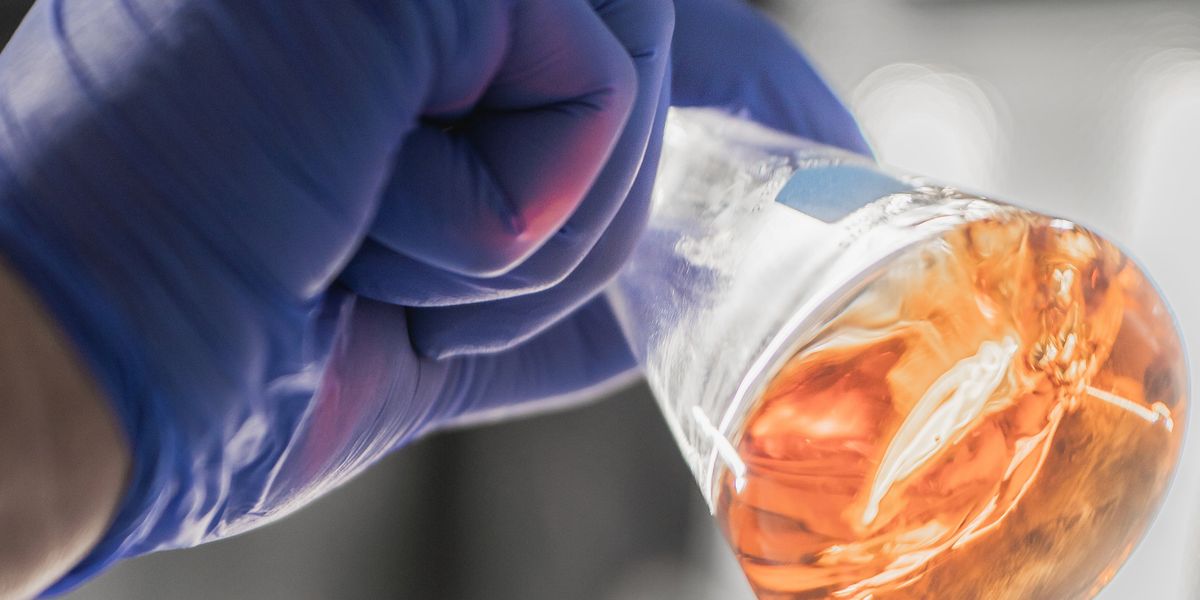
Endolith researchers use machine learning to determine which microbes to deploy at a given site and how to adjust the mix over time. Dynamic Tech Media/Endolith
In contrast, our “microbial minions” work by accelerating the natural process of bioleaching. Instead of relying on smelting or harsh acids, Endolith’s microbes attach to the ore and pull out the copper faster. They adapt to the chemistry of different rock types, recover more metal, and do it with lower energy use and less environmental impact.
To make this possible, we rely on machine learning. Genomic and metabolic data from thousands of microbes are modeled to predict which strains can survive in extreme ores such as chalcopyrite or enargite, and how they will perform under different environmental conditions. These models guide which microbial communities are deployed, how they are tuned for each site, and how they adapt over time. In effect, AI is what turns biology from trial-and-error into a scalable system for copper recovery; in turn, that copper is what keeps powering the growth of AI itself.
 Endolith is currently running a pilot project in Arvada, Colorado.Dynamic Tech Media/Endolith
Our approach has already been validated by some of the largest copper producers in the world, including BHP. Microbial recovery is cleaner. It scales. It adapts. Our modular biohatcheries—field units designed to grow and deliver tailored microbes—can be deployed in days. They can be tuned for local conditions. They make copper recovery viable on deposits that were previously left untouched. This tool opens access to a part of the supply chain that mining has overlooked and technology has rarely considered.
The copper crunch is slowing down AI
Conversations about AI infrastructure rarely address this layer. Computing costs and energy needs dominate the narrative, yet copper underpins the entire system.
 Liz Dennett founded Endolith to recover much-needed copper from low-grade ore. Dynamic Tech Media/Endolith
The physical side of AI is often hidden from view. Its presence becomes obvious when a data center project is delayed because a transformer cannot be delivered on time, or when utilities cannot build transmission lines quickly enough to support new computing loads. These are copper problems, hiding in plain sight.
I have had calls with site engineers who are excited about deploying cutting-edge computing, but are quietly worried about whether the wiring can handle it. Infrastructure does not automatically follow because the software is ready. Copper is bound by geology and time. Mines move slowly, recycling moves too narrowly, and demand moves too fast. Smarter biological recovery is the lever we can pull today.
Skeptics note that bioleaching has historically struggled with tough ores like chalcopyrite. Processes were often slow, incomplete, or difficult to manage at scale. Recent advances in microbial science and heap engineering are closing those gaps. With AI guiding the optimization of microbes, we can now match the right strains to the right ores, showing that biology can succeed where older methods fell short.
Too often, technology assumes the material world will keep pace with ambition. But ambition alone cannot dig rock from the ground—and it definitely cannot create copper. I see a disconnect between belief and infrastructure. We believe this future is coming, but the physical systems required to support it are decades behind. If we want to build something durable, we need more than ambition and venture capital. We need metal, and we need smarter pathways to extract it.
If we want to keep building, we need to be clear about what we are building with. That means extraction, wiring, and chemistry—the parts of the system that rarely make headlines but determine whether progress is possible.
The AI era will not be sustained by excitement. It will be sustained by copper. And the next leap in recovery may come from microbes…tiny, ancient, and alive.
From Your Site Articles
Related Articles Around the Web
